This is a very common and very important question, and both parts are closely connected.
Let us break it down step by step.
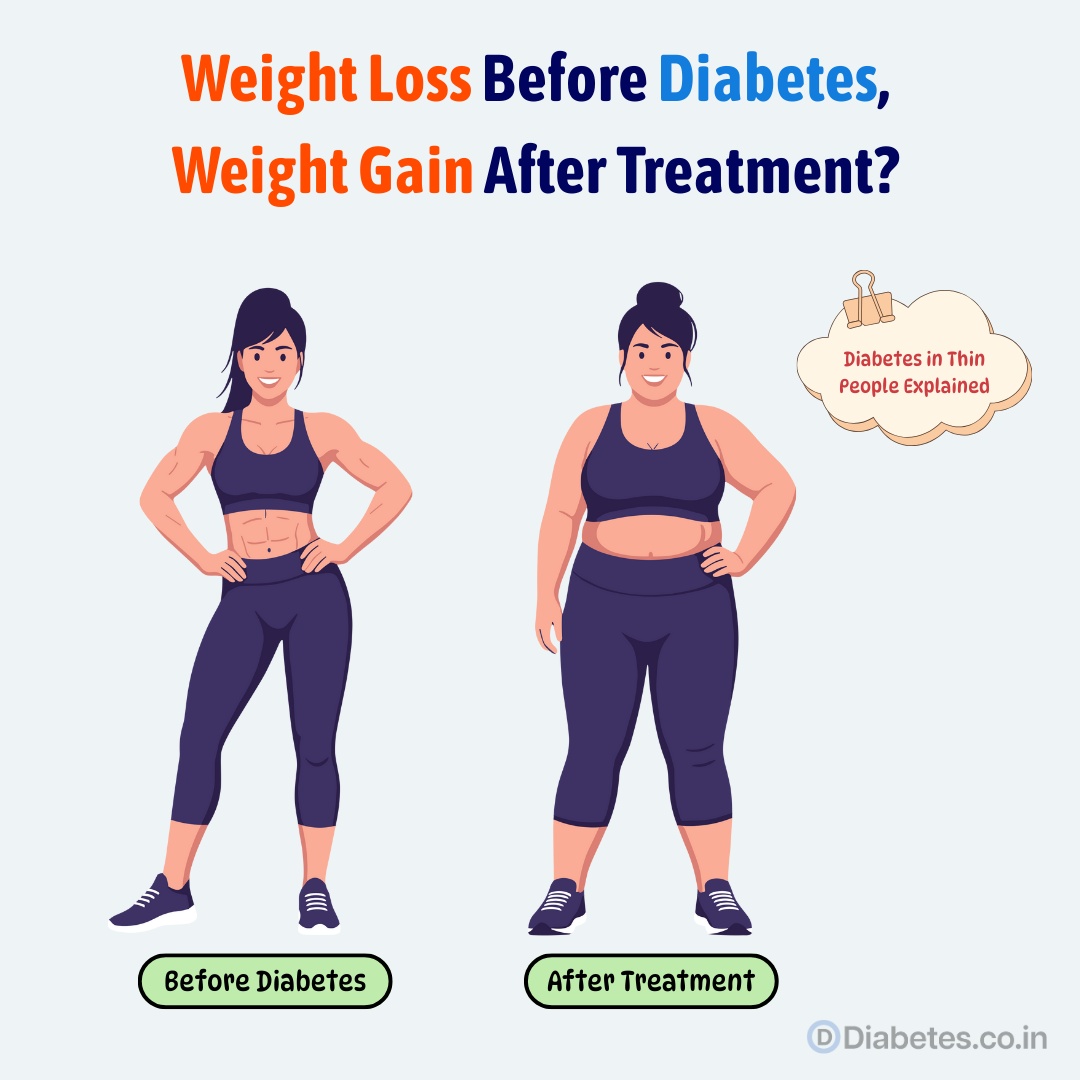
1. Why did I lose weight before diabetes was diagnosed?
Before diagnosis, diabetes is usually uncontrolled.
What happens in the body is simple:
- Sugar is present in the blood.
- But insulin is either not enough or not working properly.
- So sugar cannot enter the cells to be used as energy.
What does the body do then?
- The body thinks it is “starving”.
- It starts using fat and muscle (protein) as alternate fuel.
- Excess sugar is also lost through urine.
Result:
- Unintentional weight loss
- Weakness, tiredness
- Frequent urination and thirst
So weight loss before diagnosis is actually a warning sign of uncontrolled diabetes, not a healthy weight loss.
2. Why did I gain weight after starting diabetes treatment?
After treatment starts (diet, tablets, insulin):
- Sugar starts entering the cells again
- The body stops breaking muscle and fat
- Energy balance improves
- Loss of sugar in urine reduces
So what changes?
- The body shifts from a “breakdown mode” to a “recovery mode”
- Lost muscle and fat stores slowly come back
- Appetite improves
Result:
- Healthy weight regain, not harmful weight gain
This is a sign that treatment is working.
Some medicines (like insulin or certain tablets) can also cause mild weight gain because they improve sugar utilization. This is expected and monitored by your doctor.
3. Can thin people get type 2 diabetes?
Yes. Absolutely.
This is a very common myth:
“Only overweight people get type 2 diabetes.”
Reality:
Type 2 diabetes is caused mainly by insulin resistance and beta-cell dysfunction, not weight alone.
In many Indians and Asians:
- Diabetes occurs at lower body weight.
- Fat may be stored inside organs (liver, pancreas) rather than under the skin.
- This is called “thinfat” or metabolically obese normal-weight phenotype.
So even if:
- BMI is normal
- The person looks thin
They can still have:
- Insulin resistance
- Type 2 diabetes
This is especially common in:
- Indians and South Asians
- People with family history of diabetes
- Those with low muscle mass and higher body fat percentage
4. Why weight may stabilize or improve with good control
With proper treatment:
- Sugar control improves
- Insulin sensitivity improves
- Muscle mass recovers
- Excess fat accumulation is prevented with diet and exercise
So the goal is not weight loss at any cost, but:
- Healthy body composition.
- Good sugar control.
- Preserving muscle mass.
Simple Take-Home Messages for Patients
- Weight loss before diagnosis happens because sugar is not being used by the body.
- Weight gain after treatment usually means the body is recovering.
- Type 2 diabetes can occur even in thin people.
- Diabetes is not a disease of weight alone, but of insulin function.
- Focus on sugar control, strength, and long-term health, not just the weighing scale.
When to Talk to Your Doctor
- If weight gain is rapid or excessive
- If sugars fluctuate despite treatment
- If you are thin but sugars are high
- For personalized diet and exercise advice