
Patient's Query
female · 30 years old
My lab asked me to come fasting for diabetes tests. Do I need to be fasting for HbA1c also?
And some people say HbA1c should be checked every 3 months, while others say every 6 months. Which is correct for me?
female · 30 years old
My lab asked me to come fasting for diabetes tests. Do I need to be fasting for HbA1c also?
And some people say HbA1c should be checked every 3 months, while others say every 6 months. Which is correct for me?

No. HbA1c does not require fasting.
You can do an HbA1c test at any time of the day, with or without food. The U.S. National Institute of Diabetes and Digestive and Kidney Diseases (NIDDK) clearly states that you don’t have to fast before an A1C test, because it measures long‑term average blood sugar, not your “today’s sugar”.[1]
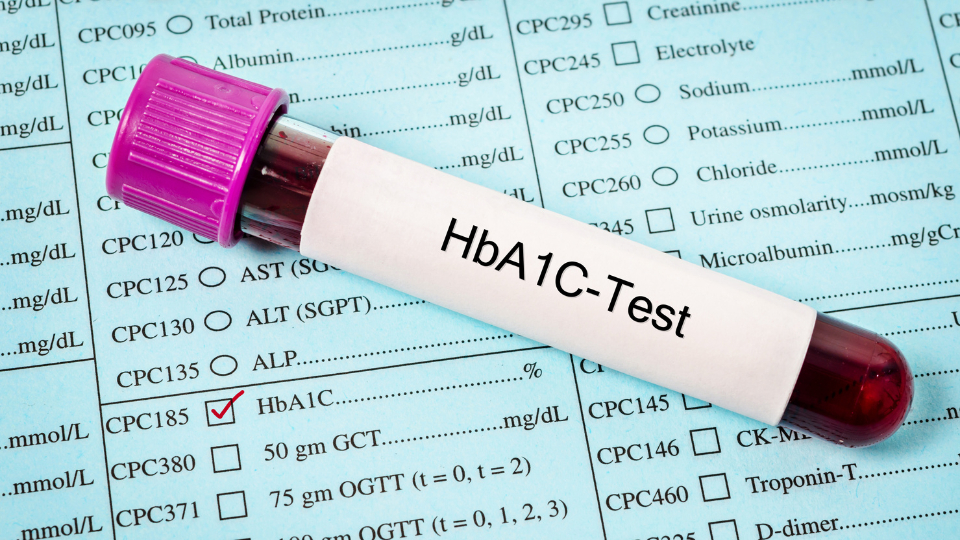
If your doctor also orders fasting sugar, cholesterol, or triglycerides on the same day, those tests may require fasting - but HbA1c itself does not.[2]
Inside your blood, sugar (glucose) sticks to hemoglobin, the protein inside red blood cells that carries oxygen. The more glucose in your blood on average, the more hemoglobin gets “glycated” (coated with sugar).
Red blood cells live for about 3 months on average.
So HbA1c reflects average blood sugar over the last ~2-3 months.[5]
Important nuance:
The most recent 4-6 weeks influence HbA1c more strongly than earlier weeks.
That means if you make major changes (diet, exercise, medicines) in the last month, you may start seeing HbA1c improvement before a full 3 months have passed.[1]
Widely used diagnostic ranges (NIDDK/ADA):
Normal: HbA1c below 5.7%.
Prediabetes (higher risk, not yet diabetes): HbA1c 5.7% to 6.4%.
Diabetes:
HbA1c 6.5% or higher.
Usually confirmed with a repeat test on another day, or with another diagnostic test, if there are no classic symptoms.
Your doctor may use fasting glucose or OGTT (sugar drink test) in combination with HbA1c, especially if results are borderline or if conditions exist that may affect HbA1c accuracy.
Both are correct, depending on your control and treatment changes.
Major guidelines (ADA, NIDDK, NGSP) recommend:
At least twice a year:
For people with diabetes who are meeting their treatment goals.
And have stable control (no big medication changes, no frequent highs/lows).
About every 3 months:
If your treatment has recently changed.
If you are not yet at your glucose target.
If you are having frequent highs/lows or unstable readings.
During intensive adjustment (e.g., starting insulin, adding new agents).
In pregnancy or pregnancy planning, your doctor may test even more frequently and use tighter targets.
A simple way to remember:
Unstable or changing plan - test every ~3 months.[4]
Stable and on target - test about every 6 months.
For many non‑pregnant adults with diabetes, a common general goal is around 7% or less, as long as this can be achieved safely (without significant hypoglycemia).
Targets are individual, not one‑size‑fits‑all:
Stricter targets (e.g., around <6.5-7%) may be reasonable if:
You are younger
Have few other illnesses
Have a long life expectancy
Can achieve lower values without frequent lows
Less strict targets (e.g., <7.5-8% or even higher in some cases) may be appropriate if you have:
Older age or frailty
Long‑standing diabetes with difficulty reaching tighter control
Severe hypoglycemia in the past or reduced awareness of lows
Advanced complications (e.g., significant kidney disease, heart disease, neuropathy)
Multiple serious comorbidities where avoiding lows is more important than a very low HbA1c.[5]
Your target should be set together with your treating doctor, based on your overall health, risk of lows, and personal priorities - not copied from someone else’s numbers.
HbA1c assumes that red blood cells live a normal lifespan and that hemoglobin is standard. It can be less reliable in conditions where this is not true, for example[4]:
Certain hemoglobin variants (e.g., some thalassemias or sickle cell traits, depending on the assay)
Recent or ongoing significant blood loss or transfusions
Hemolytic anemia (shortened red cell lifespan)
Very severe kidney disease or liver disease
Some rare situations where iron deficiency or other factors distort the result
If:
Your HbA1c result and your finger‑stick or CGM readings do not match (for example, A1c is low but daily sugars are high, or vice versa),
Or you have one of the above conditions,
your doctor may:
Repeat HbA1c with a different method,
Use fructosamine or glycated albumin for intermediate‑term control,
Or rely more on continuous glucose monitoring (CGM) metrics like “time in range”.[6]
HbA1c does not need fasting. You can go for the test at any time.
It shows your average sugar over roughly the last 3 months, with the last month influencing it the most.
Every 3 months if your control is not yet on target or your treatment is changing.
Every 6 months if your control is stable and at goal.
HbA1c targets are personal; discuss a realistic, safe goal with your doctor.
If numbers and symptoms don’t match, HbA1c may be misleading, and your doctor may use additional tests.
Disclaimer: The information provided in this Q&A is for educational purposes only and should not be considered as medical advice. Always consult with a qualified healthcare professional for personalized medical guidance and treatment recommendations.