The simple truth first
You do not need to fear fruit. Whole fruit can fit well in a diabetes‑friendly eating pattern. The key point is this, different fruits deliver very different amounts of carbohydrate in a typical serving, and carbohydrate is the main driver of the post‑meal glucose rise.[7]
Two fruit bowls can look the same in size and still behave very differently in your body.
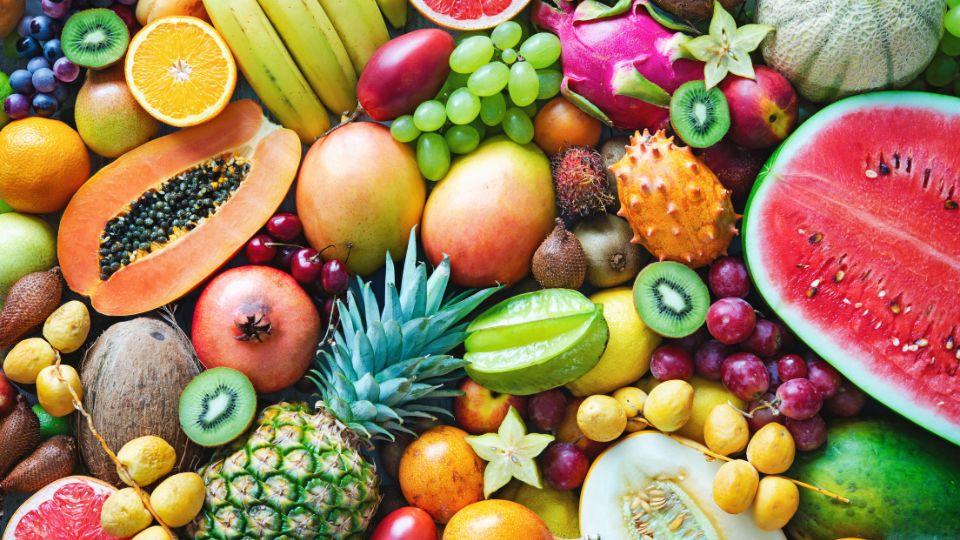
Why some fruits are higher in carbohydrates
Fruit carbohydrate comes mainly from natural sugars (fructose, glucose, sucrose) plus a smaller amount of starch and fiber. The carb “load” of a serving varies for a few clear reasons.
Water content
Water‑rich fruits contain fewer grams of carbohydrate per bite. Dense fruits pack more carbohydrate into the same volume.
Example: A large bowl of watermelon (very high water) often has similar or fewer carbs than a much smaller bowl of grapes, even though both “look” like a lot of fruit.[1]
Sugar concentration and “how easy it is to overeat”
Fruits like grapes or cherries are small pieces. You can eat a large handful quickly without feeling full, so the total carbohydrate adds up fast, even if each individual piece is small.[8]
Ripeness changes the carbohydrate form
In fruits like bananas, as the fruit ripens:
- Some of the starch is broken down into simple sugars, making the fruit taste sweeter.
- A very ripe banana tends to have a higher glycemic impact than a less ripe one, even if the portion size looks identical.[5]
Total carbohydrate doesn’t double, but the type of carbohydrate shifts toward faster‑acting sugars.
Drying concentrates sugar
Dried fruit is essentially whole fruit with most of the water removed:
- The same amount of sugar is packed into a much smaller volume.
- That is why 2 tablespoons of raisins can give around 15 g carbohydrate, roughly the same as one small fresh fruit or ½ cup fresh fruit.[3]
So small handfuls of dried fruit can equal a full carb serving or more.
Why fruit advice sounds confusing: a very short GI/GL story
In 1981, Jenkins and colleagues described the glycemic index (GI) to compare how quickly carbohydrate foods raise blood glucose after eating. Later, glycemic load (GL) was introduced to combine GI × actual portion size.[6]
GI = how fast a carbohydrate food raises glucose; GL = GI plus how much you actually eat.
For fruit, your “spikes” are often more about GL than GI, because portion size and how much you eat change everything. Many fruits have low to moderate GI, but a large portion still gives a high GL.[6]
Fruit lists that actually help in real life
The tables below use FDA raw fruit nutrition data and standard diabetes education portions to give typical total carbohydrate per serving.[3]
Table 1. Fruits that are often higher in carbohydrate per typical serving
*Carb values rounded; sources: FDA raw fruits poster and standard carb lists.
Practical warning about dried fruit:
Just 2 tablespoons of raisins/dried cherries is about 15 g carbohydrate, which equals one full carb serving for many meal plans. Many people eat far more than this without realizing.
Table 2. Fruits that are often lower-moderate in carbohydrate per typical serving
*Approximate actual portion sizes and varieties differ.
These are not “free foods”; they simply give fewer grams of carbohydrate for a similar eating experience, which usually means a more modest glucose rise.
What matters most for diabetes control
Portion size beats fruit “rankings”
Most diabetes education uses a simple carb‑counting rule:
- About 15 g carbohydrate is one “fruit serving”, which often equals:
So:
- A huge banana and a small apple do not belong in the same mental category, even though both are “fruit”.
- Thinking in “15 g carb blocks” helps you swap fruits without guessing.
Choose whole fruit more often than juice
Fruit juice:
- Has little or no fiber.
- Delivers sugar very quickly.
- Is easy to over‑drink.
Whole fruit:
- Keeps more cell structure and fiber.
- Tends to be eaten more slowly.
- Produces a smaller and slower glucose rise for the same grams of carbohydrate.
In diabetes, whole fruit is usually preferred over juice.
Pair fruit with a meal or protein
Fruit eaten alone, especially on an empty stomach, can give a sharper glucose peak.
Fruit eaten:
- After a meal, or
- Together with protein and/or healthy fat (e.g., yogurt, nuts, paneer)
Often leads to a smoother glucose curve, because stomach emptying slows and absorption is more gradual.
Use your meter or CGM once, then stop guessing
Lists are helpful, but your body is the final guide.
Try:
- Pick a typical portion of a fruit you like.
- Check glucose before eating, then 1-2 hours after.
- See how much it rises for that portion.
One or two such “experiments” with key fruits often teach you more than any generalized internet list.[7]
Simple, patient ‑ friendly summary
- You do not need to avoid fruit, but carb grams and portion size matter.
- Dense or dried fruits (banana, grapes, cherries, dried fruits) pack more carbs per bite, so portions need to be smaller and more deliberate.
- Water‑rich fruits (melon, berries, citrus in modest sizes) give more volume for fewer carbs, which many people with diabetes find easier to fit into meals.
- Think in 15 g carbohydrate “fruit blocks” and count how many blocks you’re eating per day.
- Prefer whole fruit, pair it with meals or protein, and use your meter/CGM to confirm how your own body responds.