
Patient's Query
Female · 36 years old
I’m very confused about what to eat. Everyone tells me different things. Rice is bad, roti is bad, fruits are bad…
Can you just tell me a simple way to eat without calculating everything?
Female · 36 years old
I’m very confused about what to eat. Everyone tells me different things. Rice is bad, roti is bad, fruits are bad…
Can you just tell me a simple way to eat without calculating everything?

Yes. That confusion is very common.
The Plate Method is the simplest, safest, and most practical way to eat for diabetes.
You do not need calorie counting, apps, or complicated charts.
You just need one plate.
Use a medium-sized plate (about 9-10 inches).
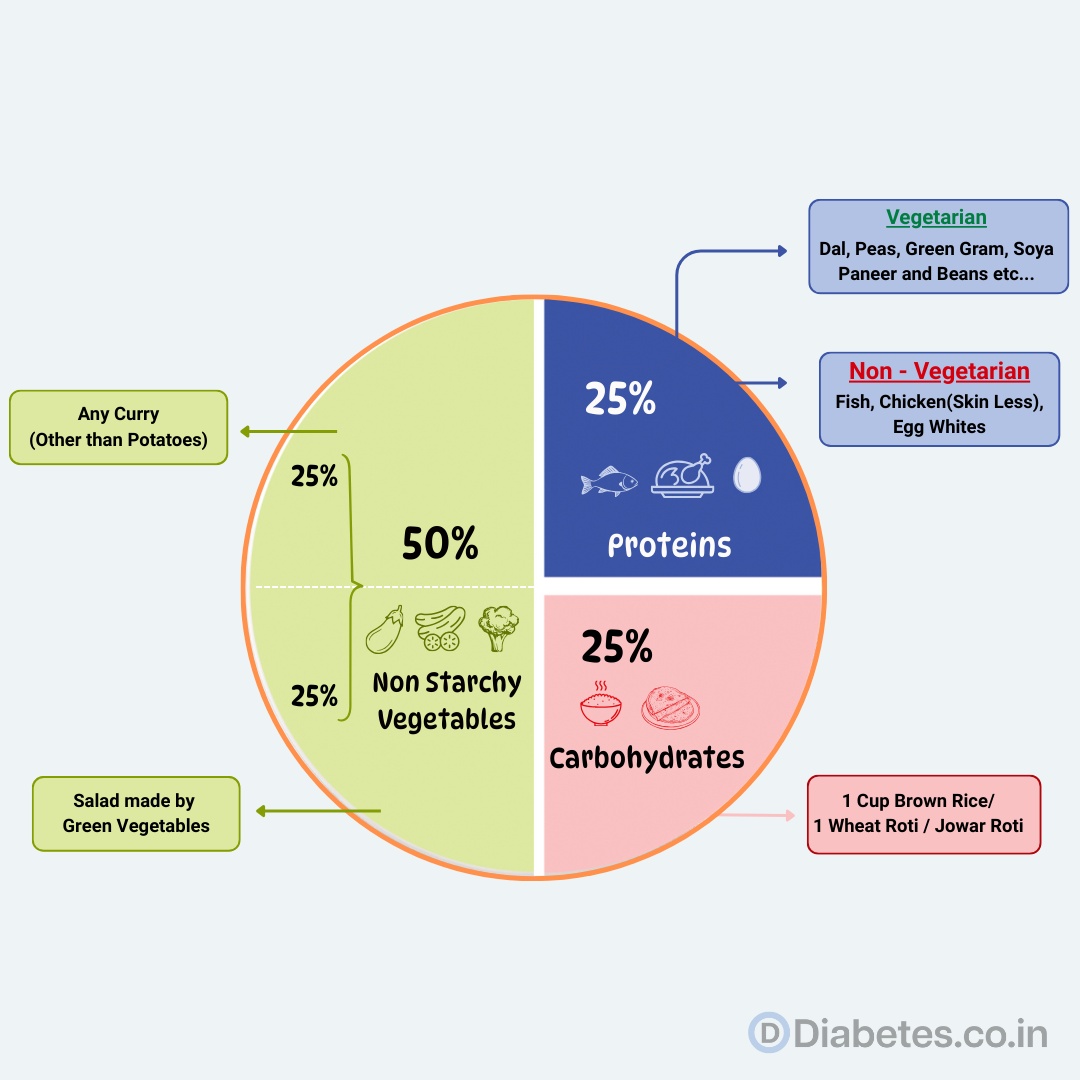
These slow sugar rise and keep you full.
Examples:
You can split this half into:
This is where most sugar rise comes from, so portion matters.
Examples:
Key point: Carbs are not banned. Quantity matters more than the type.
Protein reduces glucose spikes and preserves muscle.
Vegetarian options
Non-vegetarian options
A larger plate automatically increases portion size.
That is why we recommend:
Your eyes guide your brain before your stomach does.
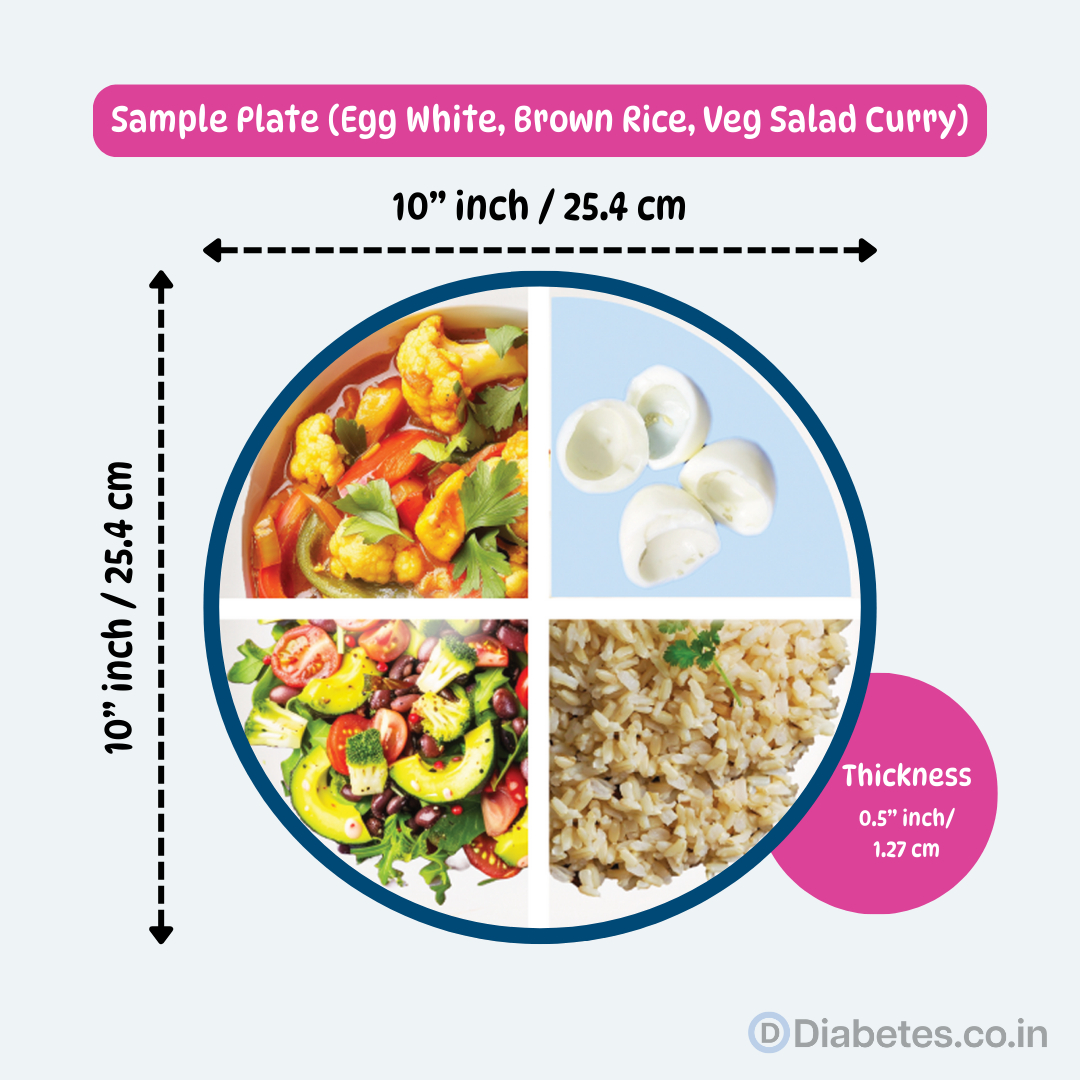
The pattern stays the same, only foods change.
Simple take-home message
What you eat matters. How much you eat matters even more.
You do not need to stop eating foods you love. You just need to control the portion.
Disclaimer: The information provided in this Q&A is for educational purposes only and should not be considered as medical advice. Always consult with a qualified healthcare professional for personalized medical guidance and treatment recommendations.