This confusion is very common, and you are asking the right question.
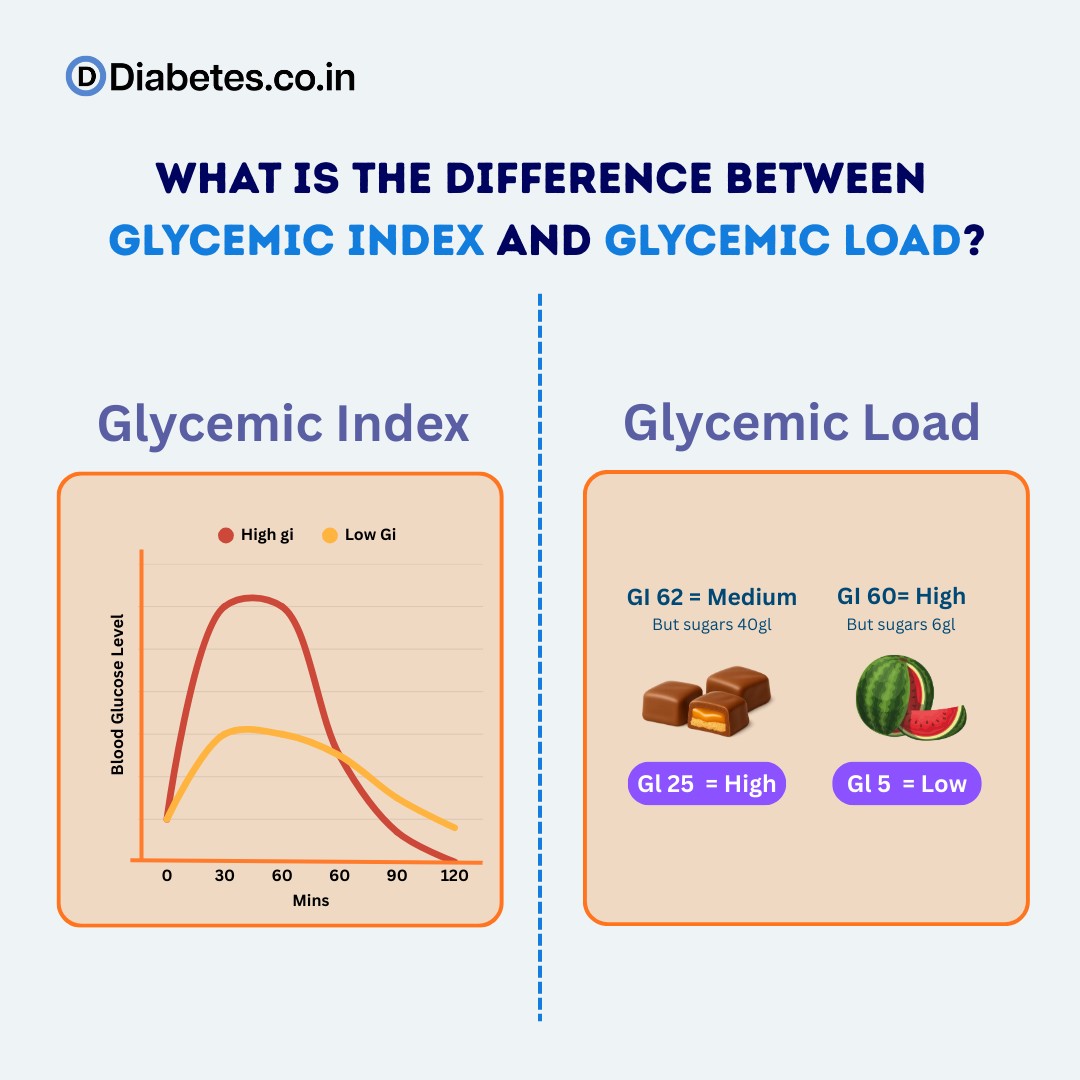
Let me simplify it:
- Glycemic index (GI) tells you how fast a food raises blood sugar compared to pure glucose. It is about speed.
- Glycemic load (GL) tells you how much total sugar load that food gives based on the portion you eat. It is about quantity.
A simple rule to remember is this: What you eat affects glycemic index. How much you eat affects glycemic load.
Let us look at this in a small table.
Now let us take your watermelon example.
Watermelon has a high glycemic index, around 70 to 75. That means the sugar from watermelon is absorbed quickly.
But watermelon is mostly water. A normal serving has very little total carbohydrate. So the glycemic load of one small slice is low.
That means:
- A small bowl of watermelon causes only a mild sugar rise
- Eating a whole large plate or half a watermelon will cause a big sugar rise
So watermelon is not “bad” by itself. The portion decides the problem.
The same logic applies to all foods:
- Guava is considered diabetes-friendly, but eating 8 to 10 guavas will raise sugar
- Rice has a high glycemic index, but a very small portion may still fit into a meal plan
This is why focusing only on glycemic index can be misleading. Glycemic load gives a more practical, real-life picture.
For daily life in diabetes:
- Prefer low to moderate glycemic index foods
- Control portion size to keep glycemic load low
- Eat fruits in moderation, not in large quantities
- Combine fruits with meals, not as large standalone snacks
Food fear is not the goal. Understanding quantity is the key.