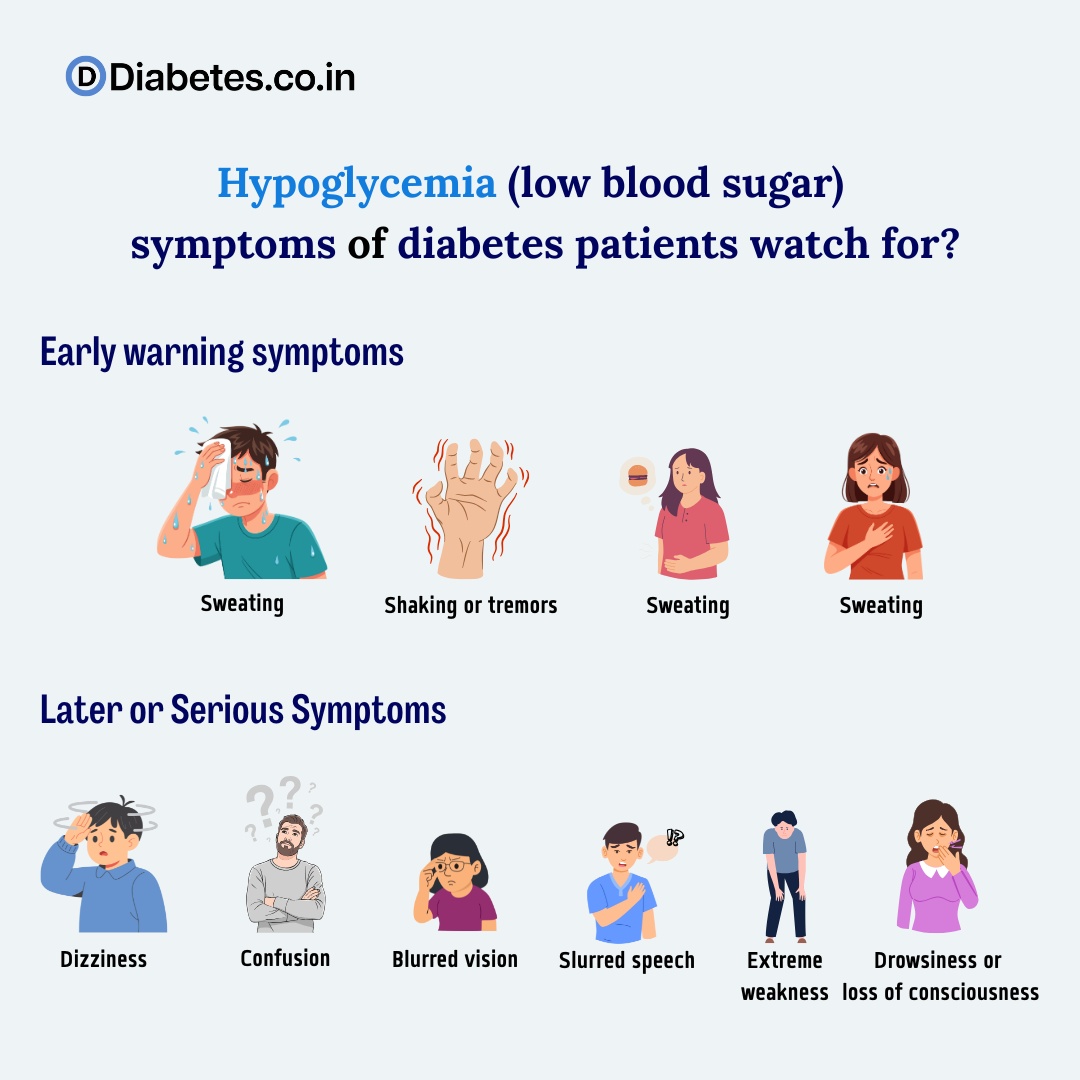
What exactly is hypoglycemia (low blood sugar) and what symptoms should diabetes patients watch for?
Patient's Query
Hi doc, after you started me on insulin, you warned me about, low Sugar. I understand high blood sugar, but I am not very clear about low blood sugar.
What exactly is Low blood sugar? What symptoms should I watch for in daily life? Sometimes I feel sweating, shaking, or sudden weakness, but I am not sure if it is really low sugar or just anxiety.
If I do not have a glucometer nearby, how do I know it is low blood sugar? Also, I heard that people with kidney problems or those using insulin and certain tablets are at higher risk.
Can you please explain this clearly so I know when to act and when to seek help?

Endocrinologist Answers
Hypoglycemia simply means low blood sugar, usually defined as a glucose level below 70 mg/dL. It is one of the most important things to understand if you are using insulin or insulin-increasing tablets.
Why hypoglycemia happens
- Too much insulin or insulin-stimulating tablets.
- Skipping or delaying meals.
- Eating less than usual.
- Unplanned heavy physical activity.
- Kidney or liver disease, where medicines stay longer in the body.

Common early warning symptoms
These happen because the body releases stress hormones when sugar falls:
- Sweating
- Shaking or tremors
- Palpitations
- Sudden hunger
- Anxiety or restlessness
Later or more serious symptoms
These happen when the brain does not get enough glucose:
- Dizziness
- Confusion
- Blurred vision
- Slurred speech
- Extreme weakness
- Drowsiness or loss of consciousness
What if you do not have a glucometer
There is a practical bedside rule many doctors teach:
- If you have typical symptoms and they improve quickly after taking sugar, it was very likely hypoglycaemia.
- For example, if sweating and shakiness settle within 10 to 15 minutes after taking glucose, sugar water, or a sweet drink, low sugar was the cause.
- If symptoms do not improve or keep worsening despite taking sugar, think of other causes and seek medical help.
Who should be extra careful
- People on insulin.
- People taking sulfonylureas.
- Elderly patients.
- Those with kidney disease or liver disease.
- People who had previous severe hypoglycaemia.
Simple safety advice
- Always carry a quick sugar source.
- Do not skip meals.
- Learn your personal warning symptoms.
- Inform family members about signs of low sugar.
Hypoglycaemia is preventable and manageable when you recognise it early.
References:
- https://diabetesjournals.org/care/article/49/Supplement_1/S132/163927/6-Glycemic-Goals-Hypoglycemia-and-Hyperglycemic
- https://idf.org/media/uploads/2025/04/IDF_Rec_2025.pdf
- https://diabetesjournals.org/care/article/26/6/1902/26493/Hypoglycemia-in-Diabetes
- https://diabetesjournals.org/care/article/36/5/1384/29546/Hypoglycemia-and-Diabetes-A-Report-of-a-Workgroup
Disclaimer: The information provided in this Q&A is for educational purposes only and should not be considered as medical advice. Always consult with a qualified healthcare professional for personalized medical guidance and treatment recommendations.