This is a real and common “other type” of diabetes: Type 3c
Most people know type 1 and type 2 diabetes. But when the pancreas gets damaged (most commonly due to chronic pancreatitis, often alcohol-related), it can cause Type 3c diabetes (also called pancreatogenic diabetes).
Here, diabetes happens because the pancreas is injured and cannot do its normal jobs properly.
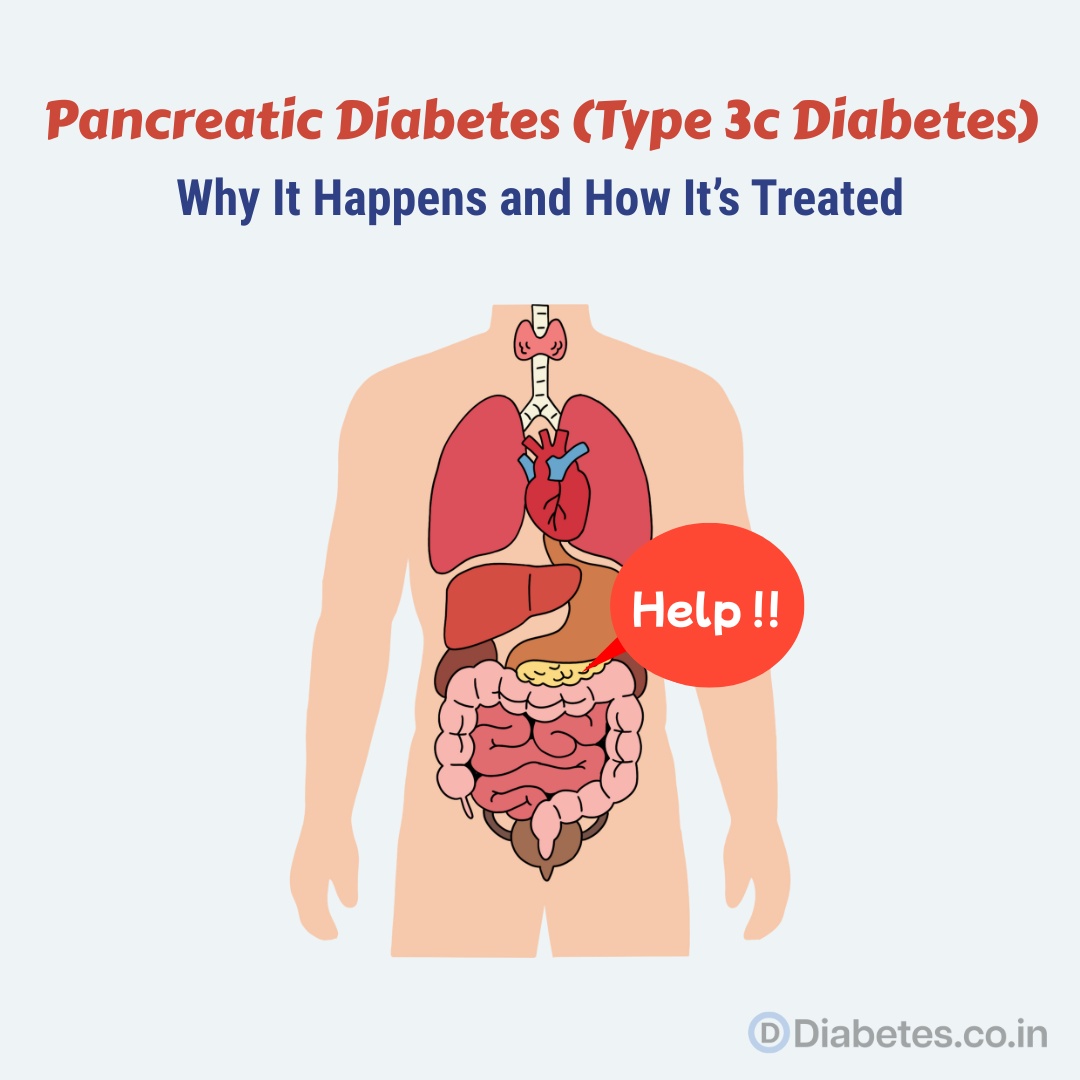
Two pancreas jobs are affected:
- Insulin production drops (so sugar rises).
- Digestive enzyme production drops (so food is not digested properly, leading to weight loss and oily stools)
That is why this condition often looks like: A lean body type with malabsorption and insulin-dependent diabetes.
Why sugars show “ups and downs” more than usual
In Type 3c diabetes, sugar control can be more “unstable” because:
- Insulin is low, so sugars rise easily.
- The pancreas also loses glucagon (a natural anti-hypoglycemia hormone), so lows can happen suddenly and may be harder to correct.
- If digestion is poor (enzyme deficiency), food absorption becomes unpredictable. One day food absorbs less, another day more, so sugars swing.This is why families feel it is a “roller-coaster diabetes.”
The stool clue is important: oily, foul-smelling stool
- Those stools strongly suggest fat malabsorption (steatorrhea) due to exocrine pancreatic insufficiency (digestive enzyme deficiency).
- If digestion is not corrected, the patient can continue losing weight and also get vitamin deficiencies.
Is insulin compulsory in this type of diabetes?
- Very often, yes, insulin becomes necessary because the pancreas has actual structural damage. Many patients cannot manage with tablets alone.
- Some patients in early or milder stages may temporarily use metformin if sugars are mild and they still have some insulin reserve, but many eventually need insulin due to progressive pancreatic damage.
Treatment is not only insulin. It is “insulin + enzymes + nutrition”
A practical Type 3c plan usually needs combined care:
Insulin
- Often required because insulin deficiency is real.
- Because hypoglycemia risk can be higher, the dose plan must be careful and individualized.
- CGM can be very useful if affordable, because it catches highs and lows early.
Pancreatic enzyme replacement
- Enzyme capsules with meals help absorb food properly.
- This can improve weight, nutrition, and even make sugars more predictable.
Nutrition and vitamins
- Many patients need nutrition advice and sometimes fat-soluble vitamin support (especially if malabsorption is proven).
- Do not do extreme carbohydrate cuts without guidance, because low intake plus insulin can trigger hypos.
Alcohol and smoking stop is treatment, not just advice
Continuing alcohol can worsen pancreatitis and worsen both digestion and diabetes control. Stopping alcohol is one of the strongest “disease-modifying” steps in chronic pancreatitis.
How do doctors confirm Type 3c diabete
Doctors suspect it when there is:
- History of chronic pancreatitis or pancreatic stones.
- Imaging evidence of pancreatic damage.
- Symptoms/signs of enzyme deficiency (steatorrhea, weight loss).
- Diabetes that behaves differently than classic type 2. Tests may include stool tests for pancreatic insufficiency (for example fecal elastase), nutrition labs, and diabetes evaluation, based on the case.
Simple takeaway for patients
- This is not “routine type 2 diabetes.” It is pancreas-damage diabetes (Type 3c).
- Sugar control is often more variable because both insulin and glucagon systems are affected, and digestion is also affected.
- Best results come from team care: endocrinologist + gastroenterologist, with insulin plus pancreatic enzymes plus nutrition.
- Do not self-adjust insulin aggressively. Hypoglycemia risk may be higher in this condition.
Safety note
If there is recurrent vomiting, severe abdominal pain, dehydration, drowsiness, deep breathing, or very high sugars with ketones, seek urgent medical care. Do not try home corrections alone.