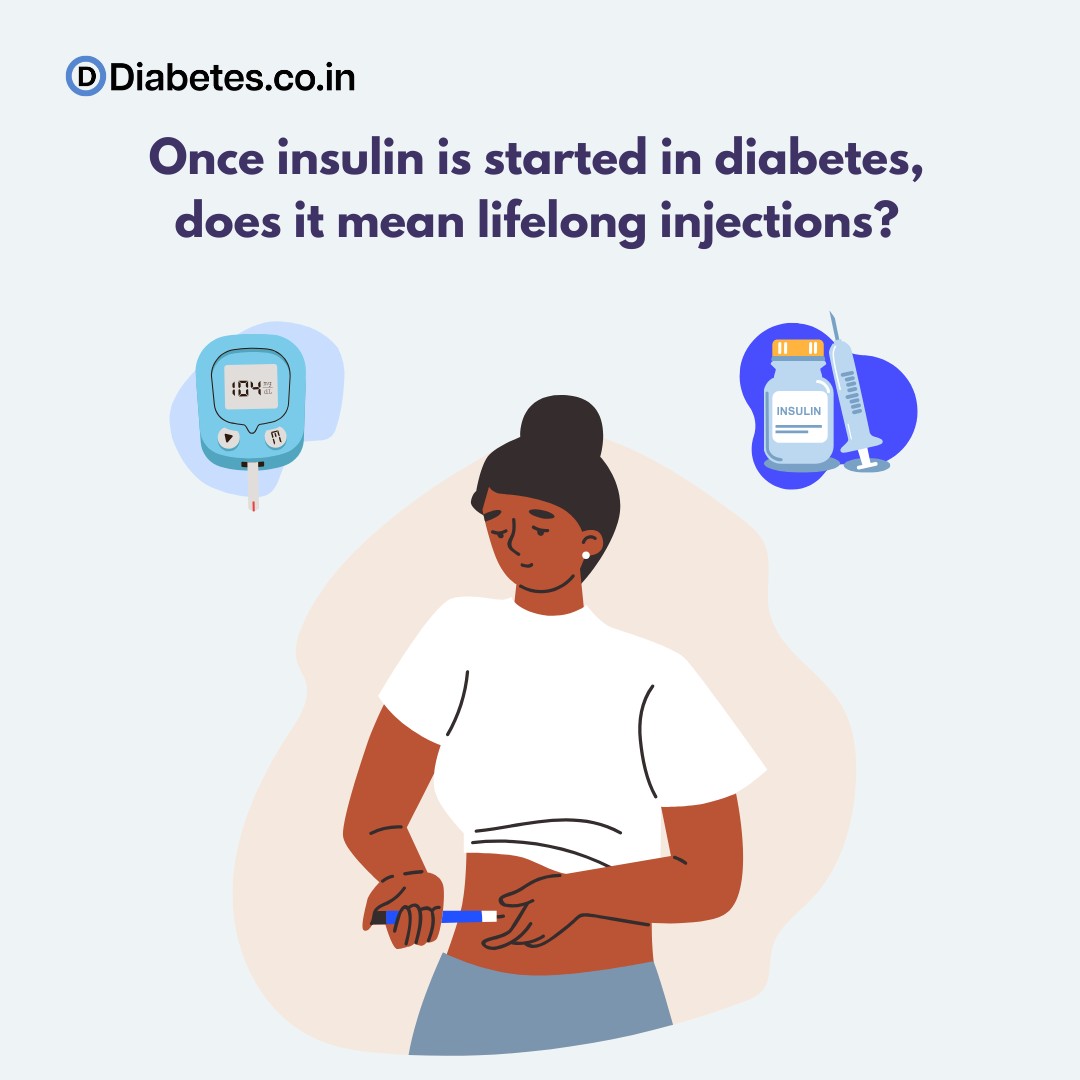
Once insulin is started in diabetes, does it mean lifelong injections?
Patient's Query
Doctor, I was very scared when you started me on insulin. My sugars were very high at that time, and you said it was needed urgently.
But now my readings have improved, and I am feeling much better. My relatives keep telling me that once insulin is started, it can never be stopped.
Some even say insulin means the last stage of diabetes. I see people on social media saying insulin makes the body dependent and damages the pancreas. Is that true?
Was insulin started only because my sugars were very high at that moment? Can I shift back to tablets later, or will I have to take injections for life? I want a clear answer because this confusion causes a lot of fear.

Doctor Answers
This is one of the most common fears I hear in clinic. Let me reassure you clearly. Starting insulin does not automatically mean it is for life.

Insulin is often used as a temporary tool to control very high sugars. When blood glucose stays high for a long time, it causes something called glucotoxicity. In this state, the pancreas becomes tired and tablets do not work well. Insulin helps bring sugars down quickly and safely.
Once sugars improve:
- The pancreas may recover partially
- Insulin resistance reduces
- Tablets can work again
In such cases, insulin can be reduced or even stopped.
There are many situations where insulin is temporary:
- Very high sugars at diagnosis
- Severe infections or hospitalization
- Before and after surgery
- During pregnancy
- ICU or critical illness
- Steroid-induced high sugars
In pregnancy, insulin is stopped after delivery. During surgery or ICU care, insulin is stopped once the stress settles.
However, insulin may be permanent in some people:
- Long-standing diabetes with low insulin production
- Very high HbA1c for many years
- Type 1 diabetes
- Advanced pancreatic damage
So insulin is not a punishment or failure. It is a treatment chosen based on the body’s needs at that time.
The decision to stop or continue insulin should always be made by your treating doctor, not by fear or internet advice.
References:
- https://professional.diabetes.org/standards-of-care
- https://pubmed.ncbi.nlm.nih.gov/25583541/
- https://pubmed.ncbi.nlm.nih.gov/18502299/
- https://pubmed.ncbi.nlm.nih.gov/7589820/
- https://idf.org/media/uploads/2023/05/attachments-63.pdf
Disclaimer: The information provided in this Q&A is for educational purposes only and should not be considered as medical advice. Always consult with a qualified healthcare professional for personalized medical guidance and treatment recommendations.