Diabetes.co.in

Non-Invasive Glucose Watches/gadgets: Are Needle-Free “Sugar Readings” Accurate Yet?

Answered byDr. Om J. LakhaniMBBS, MD, DNB (Endocrinology), Specialty Certificate in Endocrinology from Royal College of Physicians, UK
Asked on
Answered on

Patient's Query

39 years oldMale

Hey, I keep seeing ads and reels about smartwatches and gadgets that can check sugar without pricking or without any sensor needle. They claim it is ‘non-invasive’ and accurate like a glucometer or CGM.

I have diabetes and I hate finger-pricks. If a watch can show sugar, it would be life-changing.

Are these needle-free glucose watches actually accurate yet? Are any of them approved? If not, what is the safest way to monitor sugars without getting fooled?

Endocrinologist Answers

Dr. Om J. Lakhani
MBBS, MD, DNB (Endocrinology), Specialty Certificate in Endocrinology from Royal College of Physicians, UKEndocrinologistView Profile

The most important truth

As of now, a watch or ring that measures blood glucose “on its own” without piercing the skin is NOT FDA-authorized.

The FDA has specifically warned consumers about smartwatches/smart rings that claim to measure blood glucose without skin penetration. Do not rely on these for medical decisions. [1]

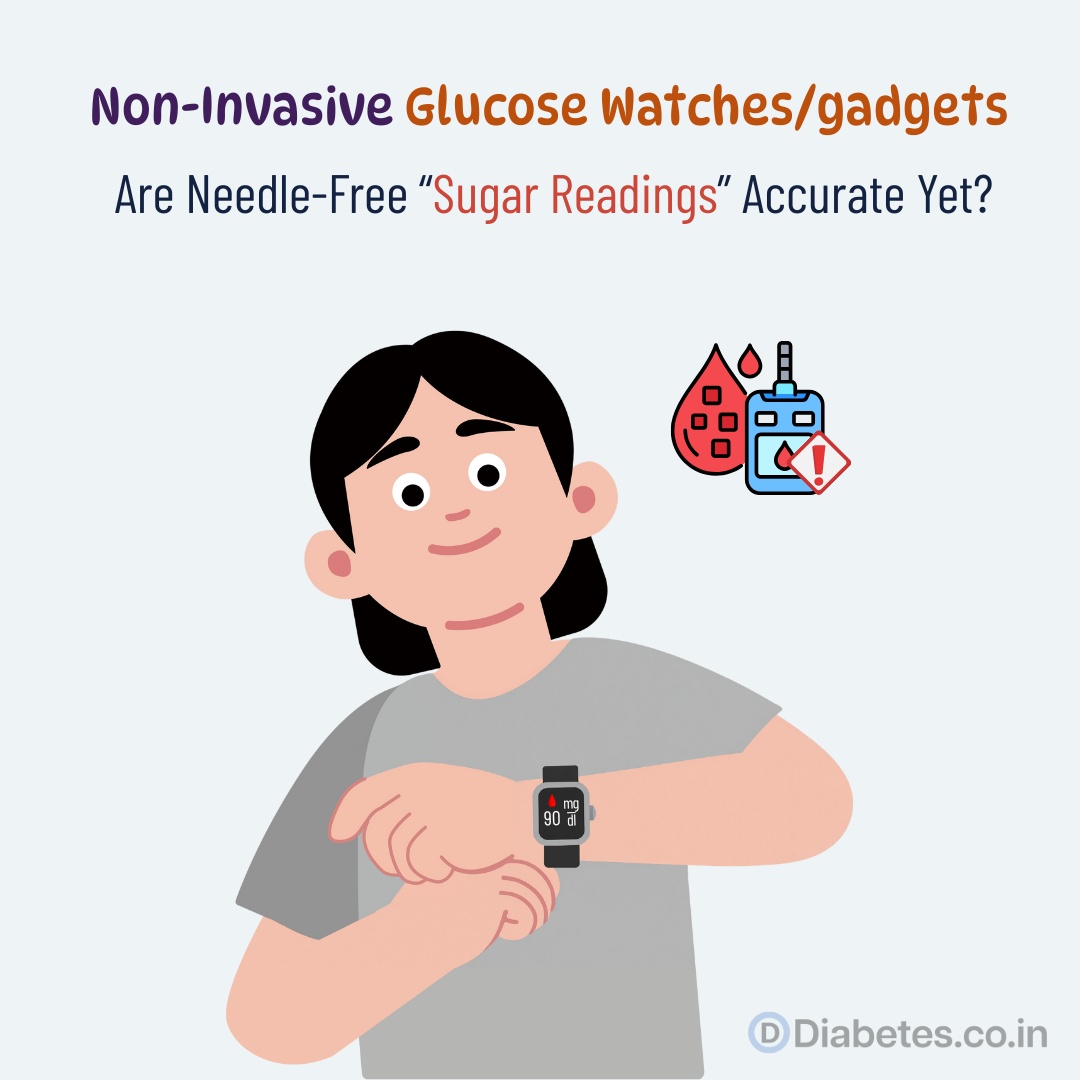
Non-Invasive Glucose Watches:gadgets

What you can do with a smartwatch

A smartwatch can still be useful in diabetes, but in a different way:

  • It can display glucose values from an approved CGM (continuous glucose monitor) app on your phone.
  • In that case, the glucose is coming from a real CGM sensor (a tiny filament under the skin), not from the watch itself. [1]

Why true “non-invasive glucose” is so hard

Glucose monitoring is difficult because:

  • Glucose is measured reliably in blood, but a watch tries to guess it through skin using light/heat/electrical signals. Small errors become big mistakes. [2]
  • Many things interfere with signals: skin thickness, sweat, temperature, hydration, motion, pressure, body hair, lotions, and even how tight the strap is. [2]
  • Glucose levels change quickly. Even CGM (which measures fluid under the skin) can show a time lag compared to blood glucose, especially when sugars are rising or falling fast. [3,4]
    So if a true needle-free watch was consistently accurate across real-life conditions, it would already be a major medical breakthrough, widely validated, and cleared for medical use.

What is currently accurate and medically accepted

  • Lab glucose tests: most accurate for diagnosis and confirmation.
  • Fingerstick glucometer: accurate when used correctly; has formal accuracy standards and testing requirements. [5]
  • CGM/FGM (sensor-based): less pain than frequent fingersticks, excellent for trends and hypoglycemia detection, but still minimally invasive (tiny sensor under skin). Lag can occur during rapid changes. [3,4]

Red flags that suggest a “fake” glucose watch

Be extra cautious if it:

  • Claims no needle, no sensor, no prick, just watch and still gives exact numbers
  • Uses words like FDA registered (this is not the same as FDA cleared/approved)
  • Avoids publishing proper accuracy data (clinical trials, comparison with lab glucose)
  • Pushes urgency marketing: “limited stock”, “doctors hate this”, “miracle gadget

Safe advice for your patients

  • If someone wants fewer pricks, the most practical option today is a proper CGM/FGM sensor prescribed and supported by a clinician.
  • If sugars are fluctuating, or there is hypoglycemia risk, CGM is more useful than a “watch claim”.
  • Never adjust insulin or strong diabetes tablets based on an unverified gadget.

Quick takeaway

  • Needle-free glucose watches are not medically reliable yet. [1,2]
  • A smartwatch can be helpful only as a display for readings from an approved CGM sensor. [1]
  • For real decisions, use lab glucose, fingerstick meter, or CGM. [3, 5]

312

Disclaimer: The information provided in this Q&A is for educational purposes only and should not be considered as medical advice. Always consult with a qualified healthcare professional for personalized medical guidance and treatment recommendations.

© 2026 Diabetes.co.in. All Rights Reserved.
DISCLAIMER: The content on Diabetes.co.in is reviewed by our Medical Review Board, led by a team of expert endocrinologists, to ensure that all information is accurate, up to date, and based on the latest evidence-based medical guidelines. The main purpose of this platform is to educate the general public about diabetes and provide reliable, easy-to-understand health information. However, this content is meant only for educational purposes and is not a substitute for professional medical advice, clinical evaluation, diagnosis, or treatment by a qualified doctor.