You have asked a very important and very common question, and you are not alone.
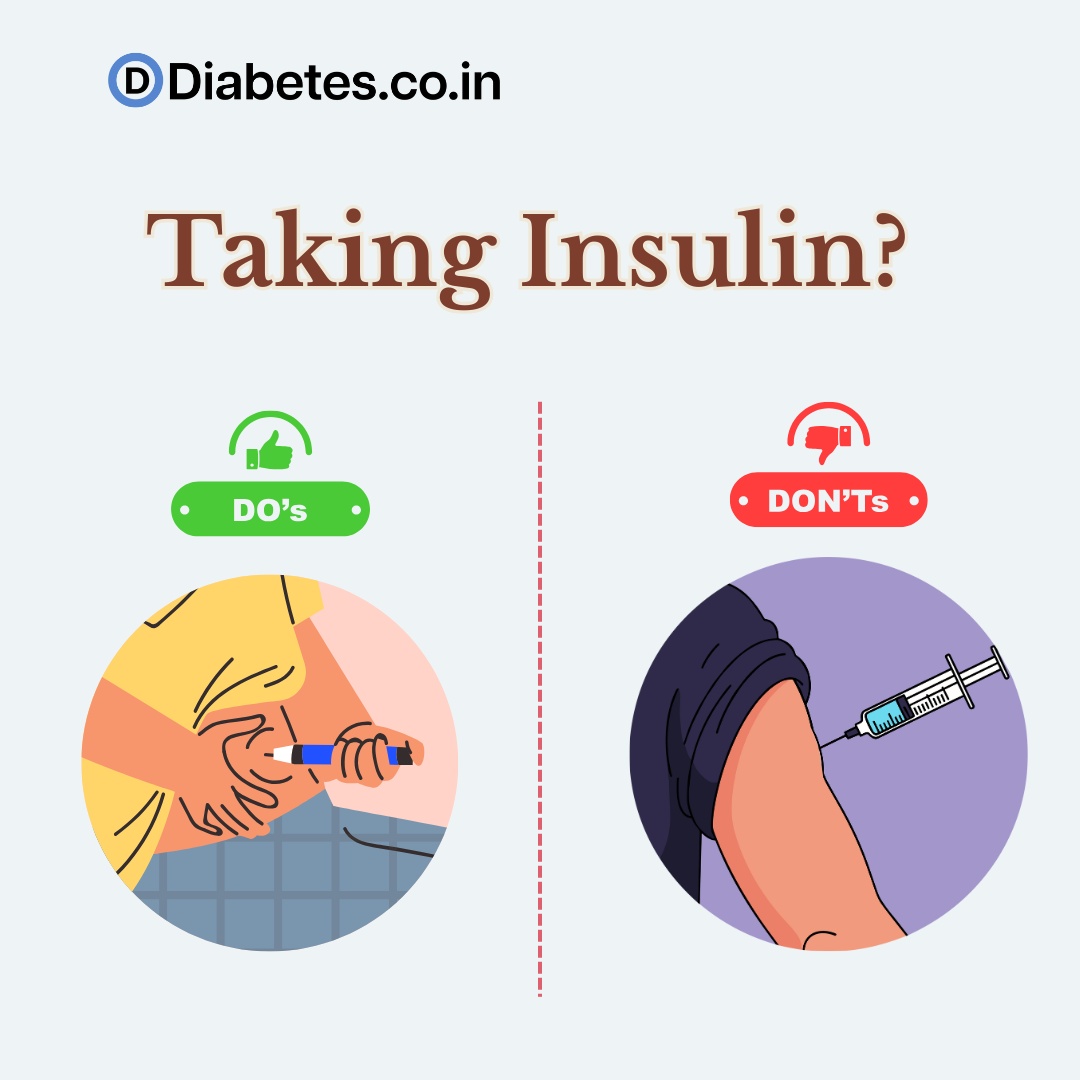
Most people grow up believing that all injections are given into muscle, because childhood injections like vaccines and antibiotics are usually given in the shoulder muscle.
Because of this, many people naturally assume insulin should also be injected into the arm muscle.
But insulin works very differently from other injections.
The Golden Rule of Insulin Injections
Insulin should be injected into fat, not into muscle.
This one rule alone can explain many unexplained low sugars and sugar fluctuations.
Why Injecting Insulin into the Arm Muscle Is a Problem
Muscles have a rich blood supply. When insulin is injected into muscle:
- It gets absorbed very fast
- It acts unpredictably
- It can suddenly drop blood sugar levels
This is why people who inject insulin into the biceps or deltoid muscle often notice:
- Sudden hypoglycemia.
- Sweating, tremors, dizziness.
- Low sugars before lunch or unexpectedly during the day.
This risk becomes even higher if:
- You walk or exercise after the injection.
- You are lean.
- You inject repeatedly at the same muscle site.
Why Insulin Is Meant for Fat (Subcutaneous Tissue)
Fat absorbs insulin slowly and steadily.
This allows insulin to:
- Enter the blood gradually.
- Work in a predictable manner.
- Match the insulin’s designed action time (short-acting, long-acting, or 24-hour insulin).
Different insulins are designed to work for:
- 4-6 hours.
- 12-14 hours.
- Up to 24 hours.
This smooth action is possible only when insulin is injected into fat, not muscle.
Correct Insulin Injection Sites (Fat-Rich Areas)
Recommended sites include:
- Abdomen.
- Outer part of the thigh.
- Back of the upper arm.
- Upper outer buttock.
Areas to avoid:
- Biceps muscle.
- Deltoid.
- Very lean or painful areas.
Why Rotating Injection Sites Is Important
Injecting insulin repeatedly at the same spot can cause:
- Lumps under the skin (lipohypertrophy).
- Erratic insulin absorption.
- Unexplained highs and lows in sugar readings.
Rotating injection points within the same region helps insulin work properly.
Important Clarification for Patients
- In emergencies, insulin is not given into muscle.
- Hospitals use intravenous insulin, not intramuscular insulin.
- Intramuscular insulin injections are not recommended in routine diabetes care
Simple Take-Home Message
“Insulin is not like other injections. It must go into fat, not muscle.”
If you have:
- Frequent low sugars.
- Unpredictable readings.
- Painful injections.
Always check your injection site and technique first.
Reassurance for Patients
If you have been injecting insulin into your arm muscle for years, do not feel guilty.
This is a very common misunderstanding.
The good news is
Correcting the injection site alone can significantly reduce hypoglycemia and improve sugar control.