This is a very important and often misunderstood topic.
The short answer is:
Yes, fructose can stress the liver more than glucose when taken in excess, but the context and source matter a lot. Whole fruits are generally safe and recommended, but relying on large portions of fruit as main food can still add up fructose loan - moderation is key.
Let me explain clearly.
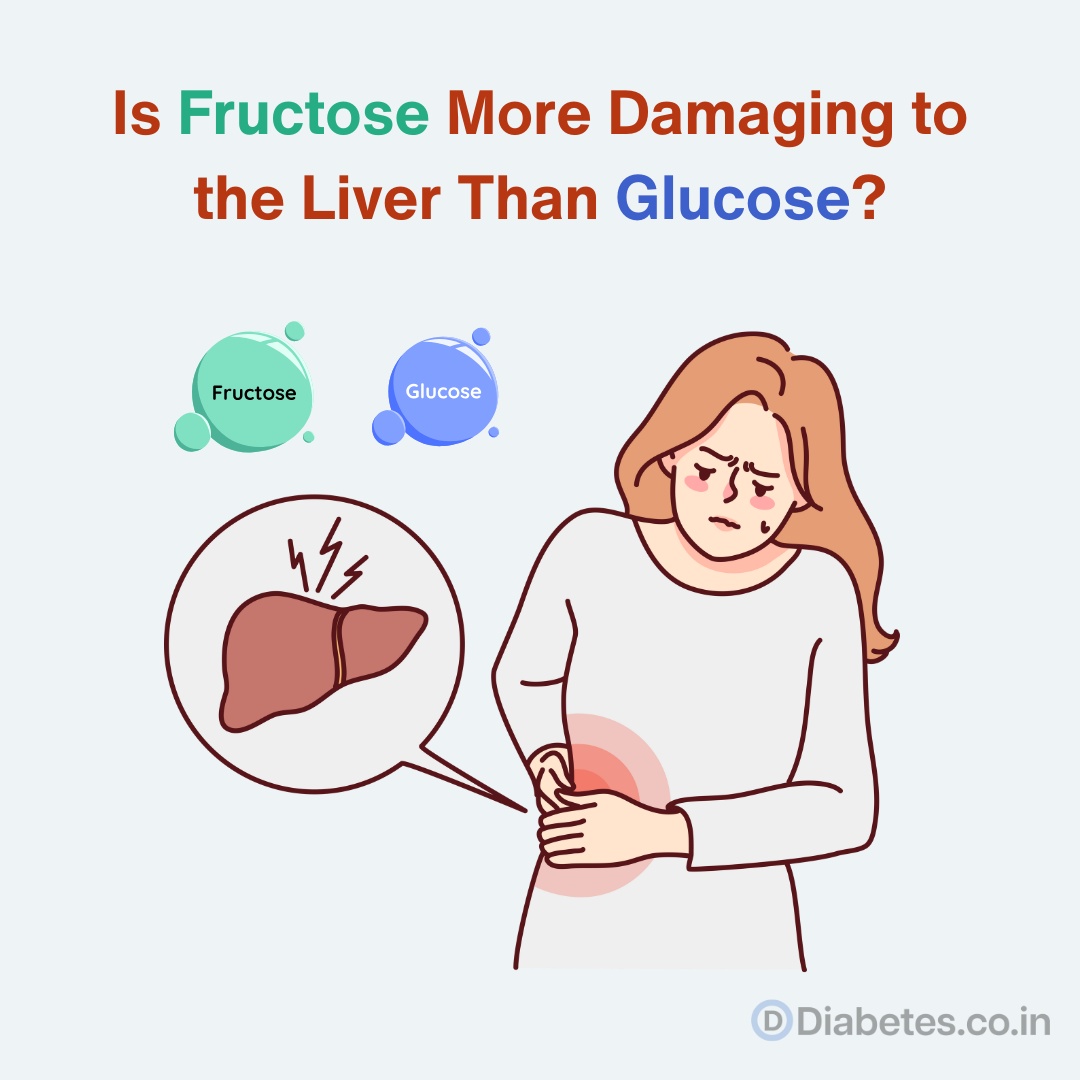
How glucose and fructose are handled differently in the body
Glucose
- Used by almost every cell in the body
- Triggers insulin release
- Excess glucose can be stored as glycogen or fat, but it is distributed across tissues.[2]
Fructose
- Metabolized almost entirely in the liver
- Does not directly raise insulin
- Bypasses the usual “brakes” that regulate sugar metabolism.[1]
Because of this, large amounts of fructose overload the liver.
Why fructose stresses the liver more
When fructose enters the liver in large amounts:
- It is rapidly converted into fat (de novo lipogenesis)
- This promotes fat accumulation in the liver
- Over time, this can contribute to:
- Fatty liver (MASLD / NAFLD)
- Insulin resistance
- High triglycerides.[1]
Glucose can also contribute to fat gain, but fructose pushes the liver more directly and more aggressively toward fat production.[2]
Does this mean fructose is “poison”? No. Source matters
This is where confusion happens.
Fructose from whole fruits
- Comes with fiber, water, antioxidants.
- Absorbed slowly.
- Does not overload the liver.
- Associated with lower diabetes and heart risk.[1]
Fructose from added sugars
- Sugar-sweetened beverages.
- Fruit juices.
- High-fructose corn syrup.
- Desserts, sweets, processed foods.
This form delivers large doses quickly, overwhelming the liver.
The problem is dose, speed and lack of fiber, not fructose itself.[3]
Fructose vs glucose in fatty liver and diabetes
Studies consistently show:
- High fructose intake from sweetened drinks increases liver fat.
- It worsens insulin resistance over time.
- It raises triglycerides more than glucose at similar calories
This is why people with:
- Diabetes
- Prediabetes
- Fatty liver
Common myths clarified
- “Fructose doesn’t raise sugar, so it’s safe” - No, It may not spike glucose immediately, but it worsens insulin resistance later
- “Honey or fruit juice is safer because it’s natural” - No, The liver responds to fructose the same way, natural or not, when taken in excess.
- “Fruit should be avoided” - No, Whole fruits are protective, not harmful.
Practical advice patients can actually follow
- Eat whole fruits, not fruit juices (1-2 servings/day is ideal, not as main meal replacement)
- Avoid sugar-sweetened beverages completely.
- Read labels for hidden sugars and syrups.
- Treat desserts as occasional, not daily.
- If you have fatty liver, be extra careful with liquid sugars and large fruit portions.
Simple takeaway
Fructose overload damages the liver more than glucose overload. But fructose in whole fruits is safe.
It is the excess added fructose, especially in liquid form, that causes harm.