Good question. Semaglutide can be used for weight loss in non-diabetics because it usually does not cause hypoglycemia on its own.
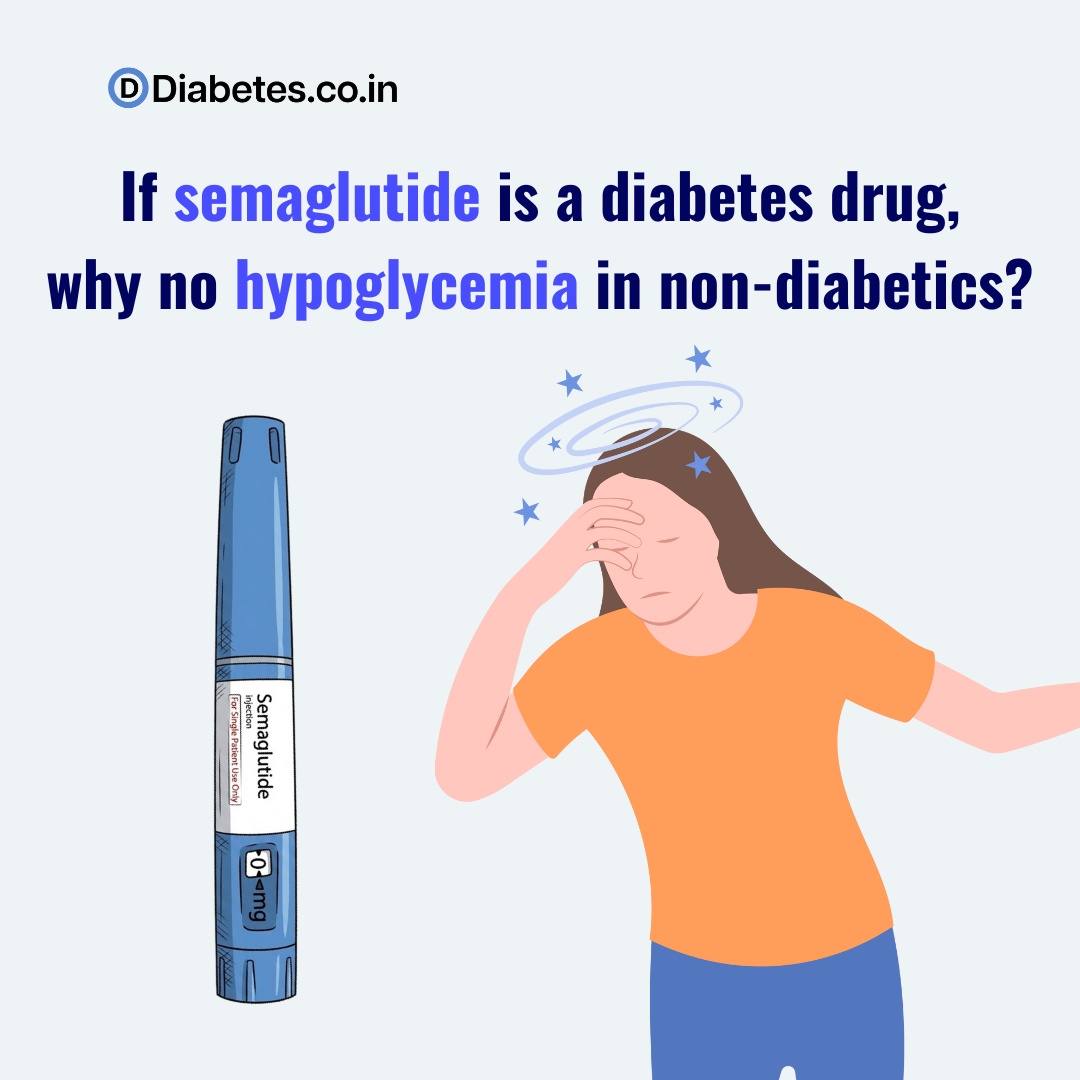
The main reason is this. GLP-1 medicines stimulate insulin release in a glucose-dependent way. In simple words, they push insulin more when sugar is high, and they back off when sugar is normal or low. That “brake” is why true low sugar is uncommon in non-diabetics.
Semaglutide also helps weight loss through other actions that do not depend on making sugar low:
- It reduces appetite and increases fullness by acting on satiety centres in the brain
- It slows stomach emptying, so you feel full sooner and longer
So, in a non-diabetic person, the body still has normal safety systems, and semaglutide mainly helps by reducing calorie intake, not by forcing sugar down.
When can hypoglycemia happen?
- If semaglutide is combined with medicines that can cause low sugar, especially insulin or sulfonylureas
- If you skip meals, have prolonged fasting, heavy alcohol intake, vomiting, or severe illness
- If you have diabetes and you are on multiple glucose-lowering drugs, dose adjustments may be needed
That is why doctors warn more about hypoglycemia when semaglutide is used along with insulin or sulfonylureas, not when it is used alone.[1,2]
Practical tip: If you are non-diabetic and using semaglutide for weight loss, routine “low sugar” is not expected. Still, eat regular meals, avoid crash diets, and report symptoms like sweating, tremors, confusion, or fainting.