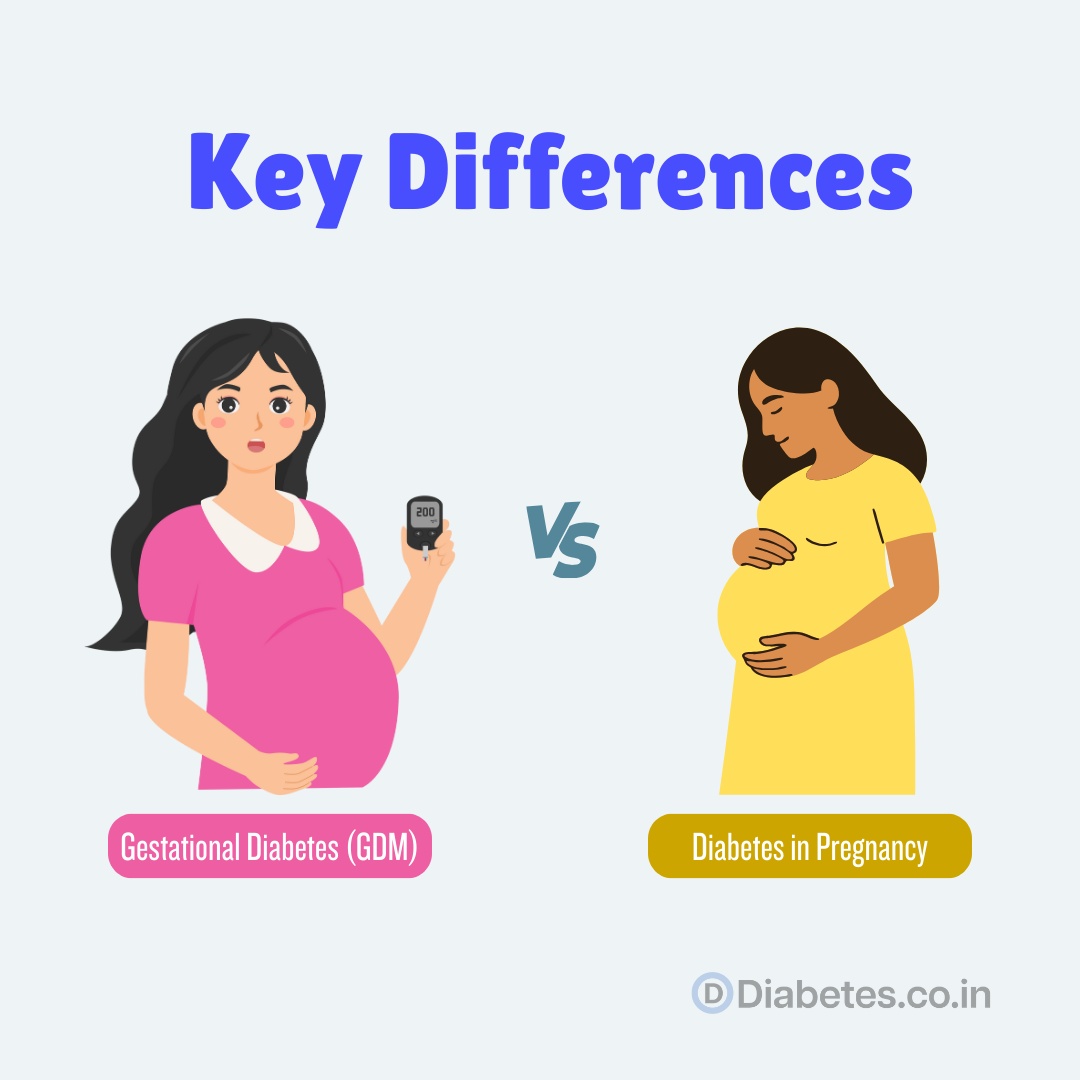
Gestational Diabetes vs Diabetes in Pregnancy: Key Differences, Risks, and Care During Pregnancy
Patient's Query
In my first pregnancy I was told I got gestational diabetes in the 7th month. After delivery, my sugars became normal and I stopped medicines.
Now, two years later, my sugar has become high again and my doctor says this is type 2 diabetes (not just pregnancy diabetes). I want to plan another pregnancy and I’m scared.
What is the real difference between gestational diabetes and diabetes that is already present before pregnancy? Is type 2 diabetes in pregnancy more risky than gestational diabetes? What precautions should I take before I plan pregnancy and during pregnancy?”

Endocrinologist Answers

You are asking the right question. The confusion happens because both conditions are “high sugar during pregnancy”, but the timing and meaning are different.
The simplest way to understand
-
Gestational diabetes (GDM) = sugar becomes high first time during pregnancy because pregnancy hormones increase insulin resistance. After delivery, those hormones reduce, so sugars often improve.
-
Diabetes in pregnancy (pre-existing diabetes) = diabetes is already present before pregnancy (known or sometimes newly detected early in pregnancy). This needs stricter planning because the baby’s organs form in early weeks.
Gestational diabetes vs diabetes in pregnancy
|
Point |
Gestational diabetes (GDM) |
Diabetes in pregnancy (pre-existing diabetes) |
|---|---|---|
|
When it starts |
First recognized during pregnancy (often mid or late pregnancy) |
Diabetes exists before pregnancy (type 1 or type 2), or detected very early in pregnancy |
|
Why it happens |
Pregnancy hormones increase insulin resistance |
Ongoing diabetes plus pregnancy insulin resistance |
|
After delivery |
Often improves, but not a “free pass” |
Diabetes usually continues after delivery |
|
Risk to baby (early pregnancy) |
Lower, because it usually starts later |
Higher if sugars are high early, because baby’s organs develop in first trimester |
|
Future risk for mother |
Higher chance of future type 2 diabetes |
Already diabetes, so long-term follow-up is always needed |
|
Treatment options |
Diet and exercise first; if needed, medicines |
Almost always needs a structured plan from preconception and throughout pregnancy |
|
Monitoring intensity |
High |
Very high (before conception + throughout pregnancy) |
Why your story makes sense
What happened to you is common:
-
First pregnancy: GDM that settled after delivery.
-
Later: your body’s insulin resistance and risk factors (family history, weight, lifestyle) continued, so you developed type 2 diabetes outside pregnancy.
So now, for the next pregnancy, it is treated as pre-existing type 2 diabetes and needs pre-pregnancy planning.
What precautions to take
Before planning pregnancy
-
Meet your gynecologist and endocrinologist before you conceive, not after.
Aim for stable glucose control before pregnancy.
-
Review medicines:
-
Some diabetes medicines are not preferred in pregnancy.
-
Insulin is the most reliable and most used option in pregnancy when targets are not met.
-
Metformin is used in some situations (depends on your case and local protocol).
-
-
Start pregnancy-safe supplements as advised (especially folic acid).
Once pregnant
Expect stricter sugar targets than usual type 2 diabetes.
More frequent monitoring (SMBG/CGM as advised).
-
Regular fetal growth monitoring and scans as your gynecologist schedules.
-
If insulin is advised, it is because it allows tight control with known safety in pregnancy.
After delivery
-
Women with GDM history should have a postpartum diabetes test, and then repeat screening regularly because future risk is higher.
Key reassurance
-
Many women with prior GDM or type 2 diabetes deliver healthy babies.
-
The biggest risk comes from unplanned pregnancy with uncontrolled sugars early.
-
If you plan properly and stay in follow-up, outcomes improve a lot.
Simple takeaway
-
GDM is like “pregnancy-unmasked insulin resistance.” It may improve after delivery, but future diabetes risk stays higher.
-
Type 2 diabetes present before pregnancy needs preconception planning because early pregnancy sugar control matters for baby development.
-
Do not self-stop medicines. Pregnancy planning is the time to fine-tune safely with your doctor
References:
Disclaimer: The information provided in this Q&A is for educational purposes only and should not be considered as medical advice. Always consult with a qualified healthcare professional for personalized medical guidance and treatment recommendations.