Diabetes.co.in

Food Sequencing for Diabetes: Does Eating Order Matter?

Answered byDr. A Mythili AyyagariMBBS, MD (General Medicine), DM (Endocrinology)
Asked on
Answered on

Patient's Query

39 years oldFemale

I keep seeing people online say this. Eat fiber first, then protein, and eat carbs last. My cousin also follows it.

Does this actually work for blood sugar, or is it just a trend?

Endocrinologist Answers

Dr. A Mythili Ayyagari
MBBS, MD (General Medicine), DM (Endocrinology)EndocrinologistView Profile

Yes, this “food sequencing” idea is real physiology, not just a social media trend.

Several clinical studies - Including in people with type 2 diabetes - show that eating vegetables and protein before carbohydrates can reduce post‑meal sugar spikes. 

The key is to adapt it in a way that fits normal Indian meals, not make the meal awkward or unnatural.

The basic idea in one line

Order matters: Fiber/vegetables first - then protein/healthy fats - then carbohydrates (rice/roti) in a controlled amount.
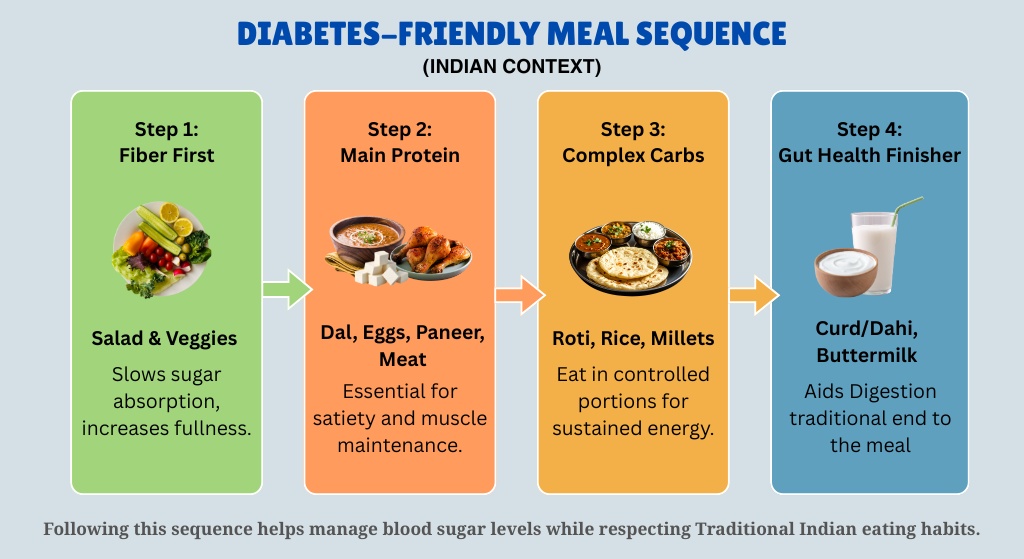
Food Sequencing for Diabetes Does Eating Order

This order helps:

  • Slow down how fast sugar from carbs enters the blood.
  • Reduce the peak (spike) after a meal.
  • Often reduce how much you end up eating of high‑carb foods.

How to apply this in a normal Indian meal

You do not need a rigid “salad only, then curd only, then roti only” rule. Think of what you start with and what you finish with, not strict separate courses.

Practical plate sequence for lunch/dinner:

  1. Start with vegetables (fiber first)

    • Begin the meal with:

      • Salad (cucumber, tomato, onion, carrot, sprouts).

      • Or a serving of cooked sabzi / greens / bhindi / palak.
    • Spend 5-10 minutes eating mainly vegetables before touching the rice/roti.
  2. Add protein early in the meal

    • Along with the vegetables, make sure you are already eating:

      • Dal / sambar / rasam with dal.

      • Curd/yogurt (unsweetened).
      • Paneer, tofu, egg, fish, chicken, or other lean protein.
    • In many Indian thalis, dal, sabzi and curd naturally come before or along with the first roti - this already supports the sequencing concept.
  3. Keep rice/roti for later in the meal (and smaller)

    • After you have eaten a decent portion of vegetables and protein, then start on:

      • Roti / phulka / chapati

      • Or rice (preferably limited, and ideally with some dal and sabzi mixed)
    • Aim for fewer rotis and less rice than you would eat if you started with them.
    • High‑GI carbs (large potato portions, sweets, juices) are best minimised or avoided; if taken at all, keep them very small and only occasionally.

In short: Sabzi and dal/curd first, then limited roti/rice”.

Why this order helps blood sugar

When you begin with vegetables and protein/healthy fats:

  • Gastric emptying slows down: Food leaves the stomach more slowly, so glucose from rice/roti enters the blood more gradually.
  • The “carb shock” is reduced: Eating rice/roti on an empty stomach gives a fast glucose rush. Having fiber and protein first blunts this effect.
  • Insulin response is smoother: Studies show lower post‑meal glucose and insulin levels when carbohydrates are eaten last instead of first.
  • You often eat fewer carbs: You feel somewhat full by the time you reach the rice/roti, so naturally the portion becomes smaller.

What research actually shows

These are not just theories:

U.S. study in type 2 diabetes

When people ate vegetables and protein first and bread/rice last, their:

  • Peak post‑meal glucose was about 30% lower.
  • Insulin rise was significantly lower. Compared with eating carbs first and veggies last.

Japanese studies - “vegetables before rice”

Simple advice - “eat vegetables before carbohydrates” - in people with type 2 diabetes:

  • Reduced post‑meal glucose excursions.
  • In some cases, improved HbA1c over months of follow‑up.

A 2022 review of trials found:

  • “Carbohydrate‑last” or “vegetables/protein first” sequencing consistently reduced post‑meal glucose and insulin
  • Effects on long‑term HbA1c were modest and variable, so this is an adjunct, not a stand‑alone “cure”.[4]

Overall message from these studies:

Order of eating can meaningfully reduce post‑meal spikes, especially in type 2 diabetes.

Where does curd fit in Indian tradition?

In many Indian families, curd is eaten towards the end of the meal.

From a scientific point of view:

  • Curd is protein, fat and some carbs.
  • Protein and fat slow gastric emptying and glucose absorption.
  • Having curd with or just before your roti/rice can help smooth the glucose curve.

So a very practical Indian sequence is:

  1. Start: salad or sabzi.
  2. Along with or just before carbs: Dal, curd and more sabzi.
  3. Last and minimal: roti/rice (measured quantity).

You do not need to eat curd alone as a separate “second course” - just make sure it is not the only thing at the very end after a massive rice/roti load. Using it earlier/alongside carbs is more helpful for sugars.

Who is most likely to benefit?

  • People with type 2 diabetes who have high post‑meal readings.
  • People with prediabetes or insulin resistance.
  • Those who eat large portions of rice/roti or refined carbs.

For many Indian patients, simply changing:

“Instead of eating roti first, begin with sabzi and dal or curd, then have a smaller portion of roti later.”

can make a noticeable difference in 2‑hour post‑meal readings.

How to test this on yourself

For 1-2 weeks at lunch or dinner:

  1. Eat in this order:

    • First: salad/vegetables

    • Then: dal/curd/paneer/other protein
    • Finally: smaller portion of rice/roti
  2. Check sugars:

    • Measure your 2‑hour post‑meal glucose on:

      • Days you follow sequencing

      • Days you eat “normal style” (carbs first or mixed)
    • Compare the numbers.

Many patients see visibly lower post‑meal readings on sequencing days, even if the total food is similar.

Simple takeaway for patients

  • Food sequencing is not a fad - it has clinical evidence behind it.
  • The goal is not to eat in strange “courses”, but to start with vegetables and protein and finish with fewer carbs.
  • In Indian terms: Start your meal with sabzi and dal or curd, and have roti or rice later in a smaller portion.
  • It works best along with:

    • Reasonable portions

    • Regular activity/walking
    • Good sleep
    • The right medicines when needed

755

Disclaimer: The information provided in this Q&A is for educational purposes only and should not be considered as medical advice. Always consult with a qualified healthcare professional for personalized medical guidance and treatment recommendations.

© 2026 Diabetes.co.in. All Rights Reserved.
DISCLAIMER: The content on Diabetes.co.in is reviewed by our Medical Review Board, led by a team of expert endocrinologists, to ensure that all information is accurate, up to date, and based on the latest evidence-based medical guidelines. The main purpose of this platform is to educate the general public about diabetes and provide reliable, easy-to-understand health information. However, this content is meant only for educational purposes and is not a substitute for professional medical advice, clinical evaluation, diagnosis, or treatment by a qualified doctor.