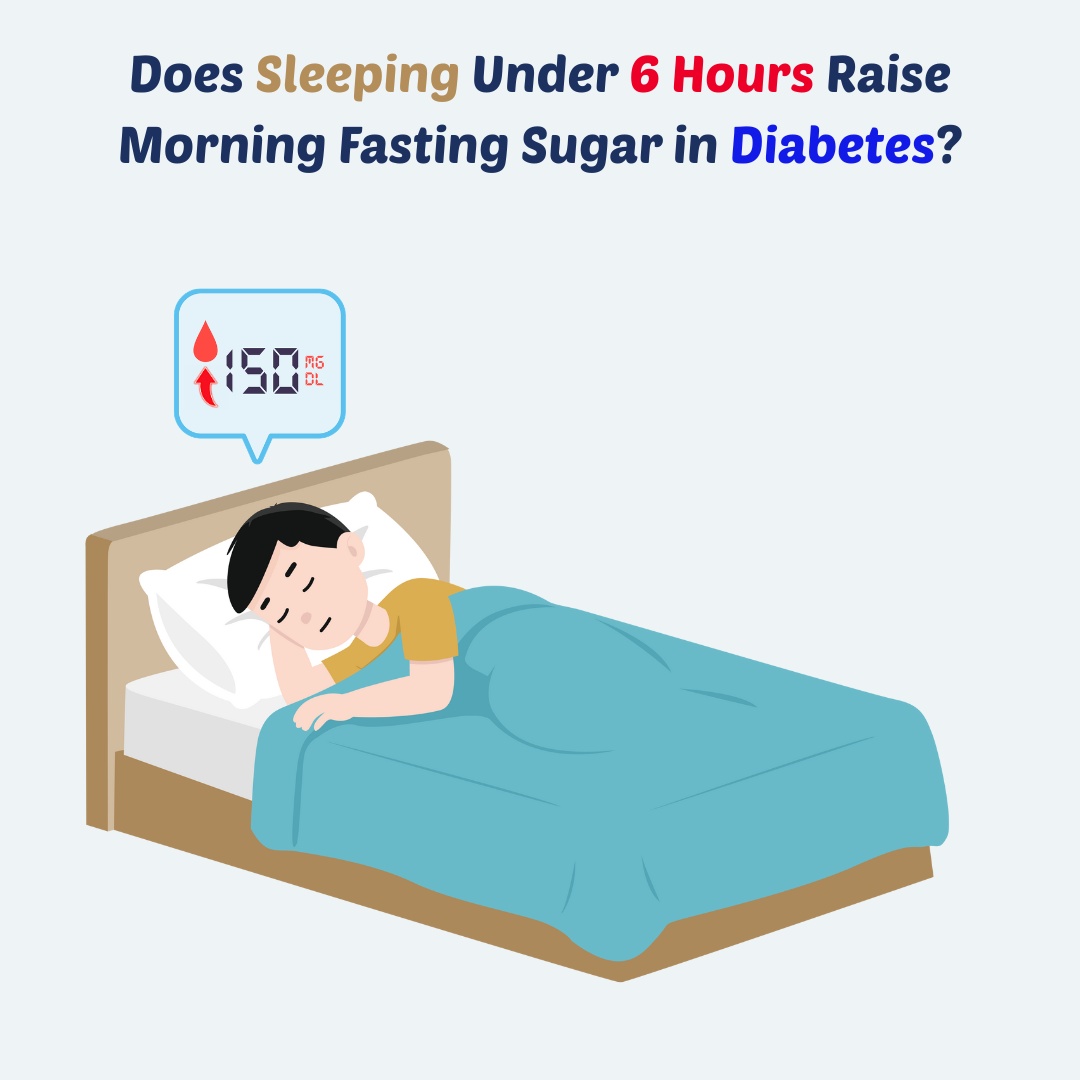
Yes, Regularly sleeping less than about 6 hours can raise morning fasting sugar in many people, including those with diabetes. What you are noticing is consistent with what controlled studies and large population studies have shown.

Why short sleep can raise fasting sugar
Several mechanisms work together:
Sleep loss reduces insulin sensitivity
- “Insulin sensitivity” means how efficiently your body’s cells respond to insulin.
- In classic lab studies where healthy adults were restricted to 4-5 hours of sleep per night for several nights, insulin sensitivity dropped by about 10-25%, even though diet and activity were controlled.
In one Diabetes study, one week of sleeping 5 hours/night reduced insulin sensitivity by ~20% (IVGTT) and ~11% (clamp) in healthy men, without changing insulin levels - meaning the same insulin now did less work.
- Similar work has shown higher glucose and insulin levels after sleep restriction, suggesting the body is working harder to keep sugar in range.
Stress hormones rise with short sleep
- Short or poor‑quality sleep increases evening and early‑morning cortisol and activates the sympathetic nervous system (your “fight or flight” system).
- Classic work from Spiegel et al. showed that after 6 nights of only 4 hours in bed, people had higher evening cortisol and higher sympathetic activity, along with poorer glucose tolerance, resembling an “older” metabolic profile.
- Cortisol and adrenaline tell the liver to release more glucose overnight → higher fasting readings.
The dawn phenomenon becomes harder to handle
- Many people with diabetes already have the “dawn phenomenon” - a natural early‑morning hormone surge (growth hormone, cortisol, catecholamines) that raises glucose.
- When sleep is short or broken, this hormone surge may be stronger or less well countered by insulin, so the same dose of insulin or tablets no longer holds fasting sugar as well.
Population studies link short sleep with impaired fasting glucose
- Large surveys in China and Korea found that adults sleeping <6-7 hours and having poor sleep quality had a higher risk of impaired fasting glucose (IFG) and type 2 diabetes, even after adjusting for weight and other factors.
- A meta‑analysis of 11 prospective cohorts (~480,000 people) showed a U‑shaped curve: the lowest diabetes risk at 7-8 hours of sleep, with risk rising as sleep gets shorter than 7 hours or longer than 8 hours.
So yes, there is solid science behind your observation: short sleep can make your body more insulin‑resistant and more “glucose‑releasing,” which shows up as higher fasting sugars, even when dinner is the same.
How big can the effect be?
In research:
- Controlled sleep restriction studies in healthy adults often report:
In real life:
- The exact mg/dL change varies between people. Some notice only a small shift; others see fasting readings 10-20 mg/dL higher on poor‑sleep nights.
- The effect is stronger if short sleep is chronic, if you have existing insulin resistance, or if you have sleep apnea.
Short sleep also raises long‑term risk of type 2 diabetes and cardiovascular disease in multiple cohort studies, even in people who do not yet have diabetes.
If I improve my sleep, will my fasting readings improve - short term or only long term?
Evidence suggests both:
- In lab studies, when participants went back to normal or extended sleep (“recovery nights”), some of the hormonal and metabolic abnormalities (e.g., elevated evening cortisol, worsened glucose tolerance) partly reversed within a few nights.
- That means if you regularly sleep 5-6 hours and move toward 7-8 hours, you may see better fasting and post‑meal numbers within days to weeks, not just years later.
- Over the long term, better sleep duration and quality are associated with lower risk of developing diabetes (in people without diabetes) and better cardiometabolic outcomes in those with diabetes.
However, sleep is just one part of fasting glucose:
- Dinner timing and size.
- Late‑night snacks.
- Medication dose/timing. (especially basal insulin or long‑acting tablets)
- Underlying dawn phenomenon. all still matter. So sleep improvement usually helps, but it is not a magic cure - it is one important “lever” among several.
What you can do this week
Increase sleep gradually toward 7-9 hours
- If you are at 5 hours, aim first for 6.5-7 hours, even on workdays.
- Keep bedtime and wake time consistent for at least 10-14 days to see a pattern.
Reduce late‑night screen and phone use
- Blue light and mental stimulation close to bedtime delay sleep onset and fragment sleep.
- Try a “digital curfew”: no screens 30-60 minutes before your intended sleep time.
Watch caffeine and heavy meals in the evening
- Avoid strong tea/coffee or energy drinks after mid‑afternoon.
- Try to finish large meals 2-3 hours before bed.
Screen for sleep apnea if at risk
- If you snore loudly, stop breathing at night (reported by partner), wake unrefreshed, or feel sleepy in the day, ask about sleep apnea testing.
- Obstructive sleep apnea is common in people with diabetes and strongly linked with high fasting glucose and resistant hypertension.
Track your own data
- For 1-2 weeks, record:
- You will likely see that shorter or more disturbed nights correlate with higher fasting sugars, even on similar meals.
If, after improving sleep and evening habits, fasting sugars remain high, your doctor will still review:
- Dinner carbs and timing.
- Basal insulin or long‑acting medications.
- Dawn phenomenon management.
Sleep is not the only factor, but it is a real, modifiable factor that often gets ignored.