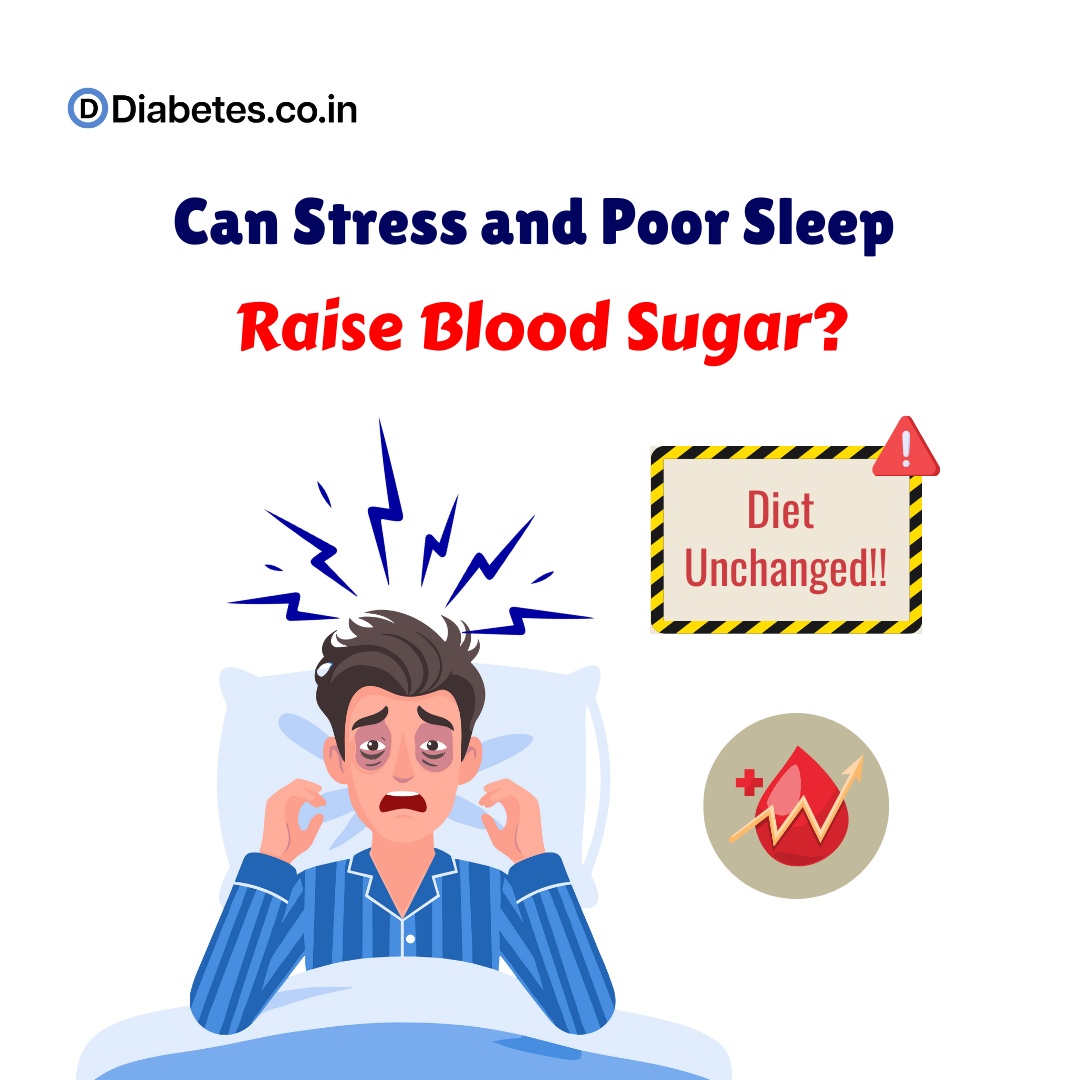
Yes. Stress and poor sleep can raise blood sugar even when your diet stays the same. This is not a theory. We see it in real life, and studies support it.
How stress raises sugar
When you are stressed, your body releases hormones like cortisol and adrenaline. These hormones tell the liver to release more glucose into the blood and they also make your body less sensitive to insulin. So sugars can rise even without extra food. [2]
How poor sleep raises sugar
Short or poor-quality sleep can worsen insulin resistance. In studies, sleep restriction reduces insulin sensitivity, and recovery sleep can improve it again.[1,2]
In people with type 2 diabetes, poor sleep is linked with higher HbA1c and poorer glycaemic control.[1]
A very practical sign it is sleep or stress
Many people notice:
- Morning fasting sugars rise during stressful weeks.
- Post-meal sugars become more unpredictable.
- Cravings increase when sleep is short, which indirectly worsens control too.[4]
What you can do that actually helps
- Fix a regular sleep window and target 7 to 8 hours most nights.
- Avoid caffeine after mid-afternoon.
- Keep phone away for 30 to 60 minutes before bed.
- Do a short wind-down routine: slow breathing, light stretching, warm shower.
- If you snore loudly, have daytime sleepiness, or wake up unrefreshed, get checked for sleep apnea because it can worsen sugars.[1,4]
- If you are on insulin or sulfonylureas, monitor sugars when sleep is poor because variability increases.
So yes, you can do everything “right” with food, and still struggle if sleep and stress are not addressed. Improving them often reduces HbA1c without changing your diet much.