
Patient's Query
male · 36 years old
I have type 2 diabetes. If I donate blood, will my HbA1c go down? Some people online say blood donation ‘improves sugar control’. Is that true?
male · 36 years old
I have type 2 diabetes. If I donate blood, will my HbA1c go down? Some people online say blood donation ‘improves sugar control’. Is that true?

HbA1c reflects how much sugar has attached to hemoglobin in red blood cells over their lifespan.
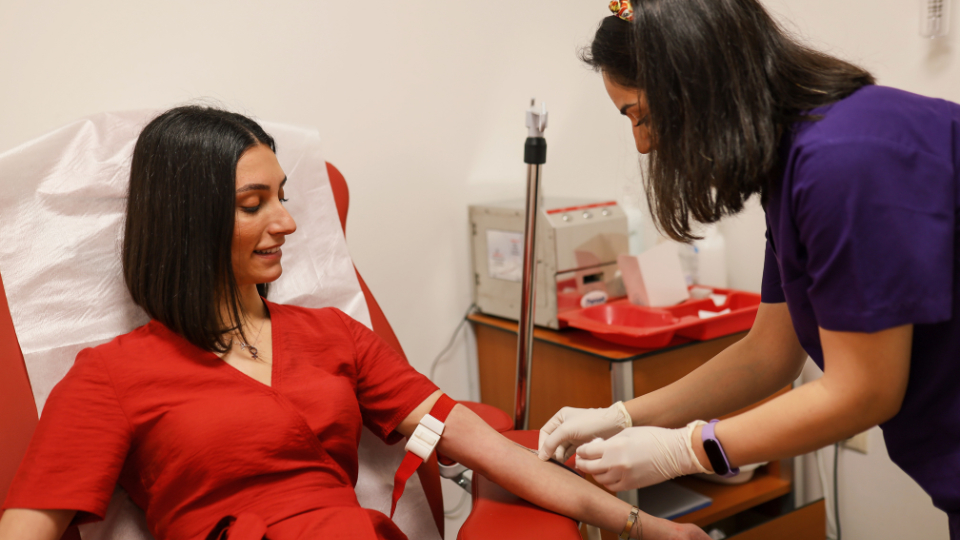
When you donate blood (typically about 450-500 mL):
Your body is stimulated to make new red blood cells to replace the ones removed.
These new cells are younger and have had less time to be exposed to glucose, so they carry less glycation.
This can artificially lower the measured HbA1c, even if your day‑to‑day glucose control has not actually improved.
A prospective study of 23 non‑diabetic donors and 21 donors with type 2 diabetes who gave 475 mL of blood and were followed for 8-9 weeks showed[1]:
More than half of donors (about 52% of non‑diabetics and 59% of donors with type 2 diabetes) had a significant reduction in HbA1c after donation.
In some individuals, the maximum drop in HbA1c was about 10-12% relative reduction from baseline.
Many donors still had HbA1c values lower than their original baseline when they became eligible to donate again (about 8-9 weeks later).
The authors concluded that whole blood donation can lead to falsely lowered HbA1c and misinterpretation of glycemic control in people with diabetes.[7]
So yes, blood donation can lower the HbA1c result, but that drop often does not reflect a true change in average glucose.
For most people, no.
Blood donation is a valuable, altruistic act that can help others.
It is not a diabetes treatment and should not be used as a “hack” to make HbA1c look better.
If your HbA1c falls after donating blood, it may simply be:
Because your red blood cell population has become younger on average, not because your real glucose exposure has improved.[3]
Using blood donation as a way to “fix” a lab number is misleading and potentially dangerous, because it can:
Hide the need for genuine treatment changes.
Give a false sense of security about long‑term sugar control.
HbA1c becomes less reliable whenever red blood cell turnover is altered, for example[2]:
Recent blood loss or blood donation.
Recent blood transfusion.
Hemolysis.
Certain anemias and hemoglobin variants.
Advanced kidney disease, some liver diseases, pregnancy.
Because HbA1c depends on both glucose level and red cell lifespan, anything that shortens or alters red cell life can make HbA1c falsely low (or occasionally high).
Guidance from NGSP and expert reviews specifically list recent blood loss, transfusion, hemolytic anemia, and some hemoglobinopathies as conditions where HbA1c must be interpreted with caution and may not reflect true average glycemia.[3]
If someone has recently donated blood or has another condition affecting red cell turnover, clinicians often rely more on other markers for a period, such as[4]:
Home glucose logs.
Continuous glucose monitoring (CGM) metrics:
Time in Range (TIR)
Time above range / below range
Glucose Management Indicator (GMI)
Fructosamine or glycated albumin in selected situations:
These reflect shorter‑term control (~2-3 weeks) and are not affected by red cell lifespan in the same way HbA1c is.
These are “backup tools” when HbA1c is temporarily unreliable.
In many countries, yes, as long as the diabetes is reasonably well controlled and you meet general donation criteria.
Examples:
The American Red Cross states that people with diabetes (including those on insulin) are generally eligible to donate blood if their diabetes is well managed and they meet standard health and hemoglobin criteria.[8]
The NIH and major U.S. blood services similarly note that having diabetes does not automatically disqualify you from donation, though local rules may vary and some countries restrict donation from people using insulin.
Key eligibility points usually include:
Feeling well on the day of donation.
Adequate hemoglobin level.
No recent severe hypoglycemia or major acute illness.
Meeting other infectious disease and safety criteria of the blood service.
Always:
Check your local blood bank’s rules.
Speak with your doctor if you have complications (heart disease, kidney disease, severe neuropathy) before donating.
Blood donation can temporarily lower HbA1c, but mainly by changing red blood cell turnover - it does not automatically mean your diabetes control has truly improved.
Do not donate blood as a method to reduce HbA1c. It is not therapy.
If you have donated blood recently, tell your doctor before they use HbA1c to make big medicine changes.
In the weeks after donation, your doctor may lean more on glucose logs, CGM data, or fructosamine rather than HbA1c alone to judge control.
People with diabetes can often donate blood safely if their condition is well controlled and they meet their local blood service’s criteria.
Disclaimer: The information provided in this Q&A is for educational purposes only and should not be considered as medical advice. Always consult with a qualified healthcare professional for personalized medical guidance and treatment recommendations.